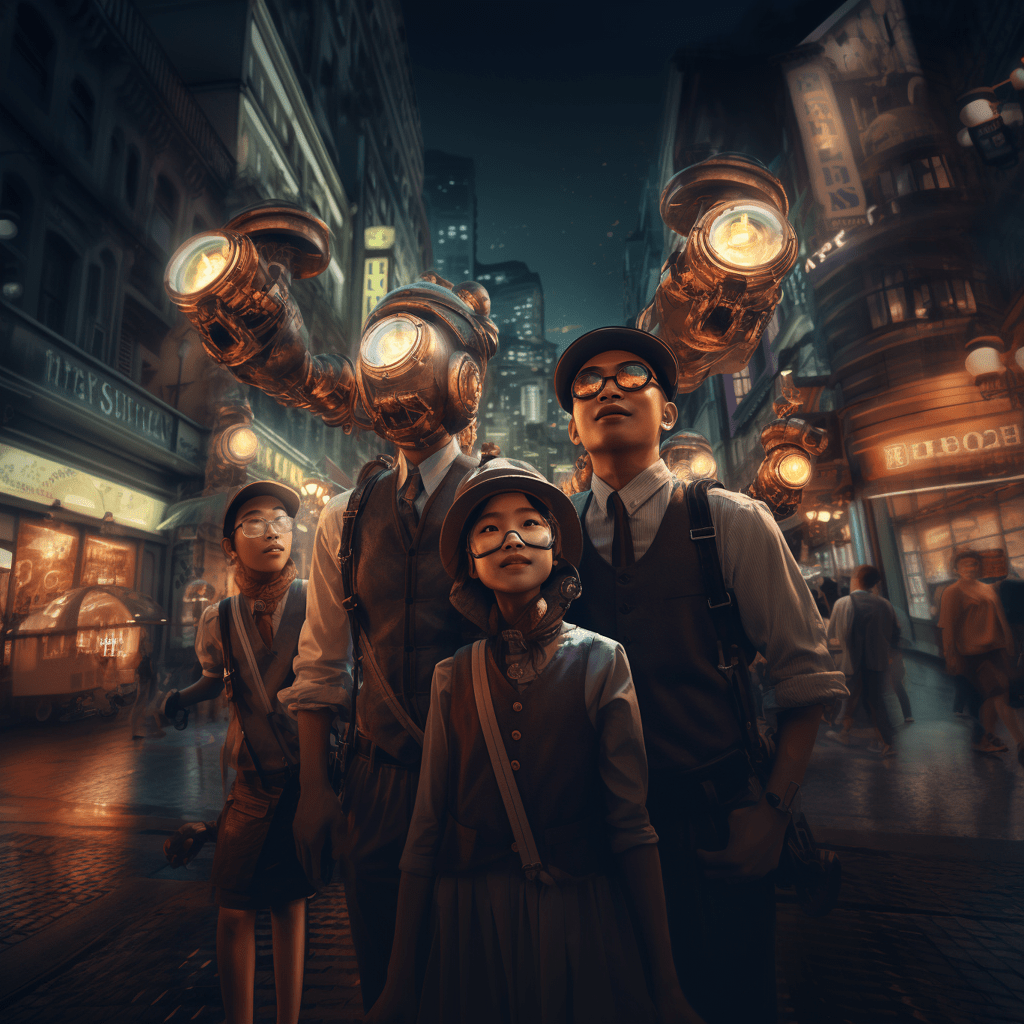
Frederick Pohl once said that Science Fiction wasn’t about technology but rather its human and societal implications – in other words, it wasn’t about cars but about traffic jams. This idea of using science fiction to describe and explore the implications of futuristic technologies and the social structures enabled by them was behind the project Cntrl+Alt+Delete by Nanyang Technological University, the Singapore government, and four speculative fiction writers (myself, Sarah Ang, Wen-yi Lee and Nuraliah Norasid).
Yesterday we got to talk about our SF stories and the cutting-edge technologies we wrote about at the Synergy Art x Tech Fringe Festival at the Figma Clubhouse organized by #Tusitala and #BeFantastic. Poet, technology enthusiast and civil servant Tse Hao Guang facilitated.
I had written 3 short stories: these include (1) a puppy love romance between two teens trapped in locked-in syndrome, involving AI, EEGs and Virtual reality technologies, (2) an extraordinary Singaporean triathlete and his obsession with enhancing his sports performance at any cost, involving advance prosthetics, and gene therapy, and lastly (3) a slightly gonzo tale about an alien invasion in Bukit Batok, with exploding birds, interdimensional travel, an autonomous vehicle full of hapless retirees in the most low-speed death ride ever. All three will become part of my second short story collection which I plan to finish by the end of this year.
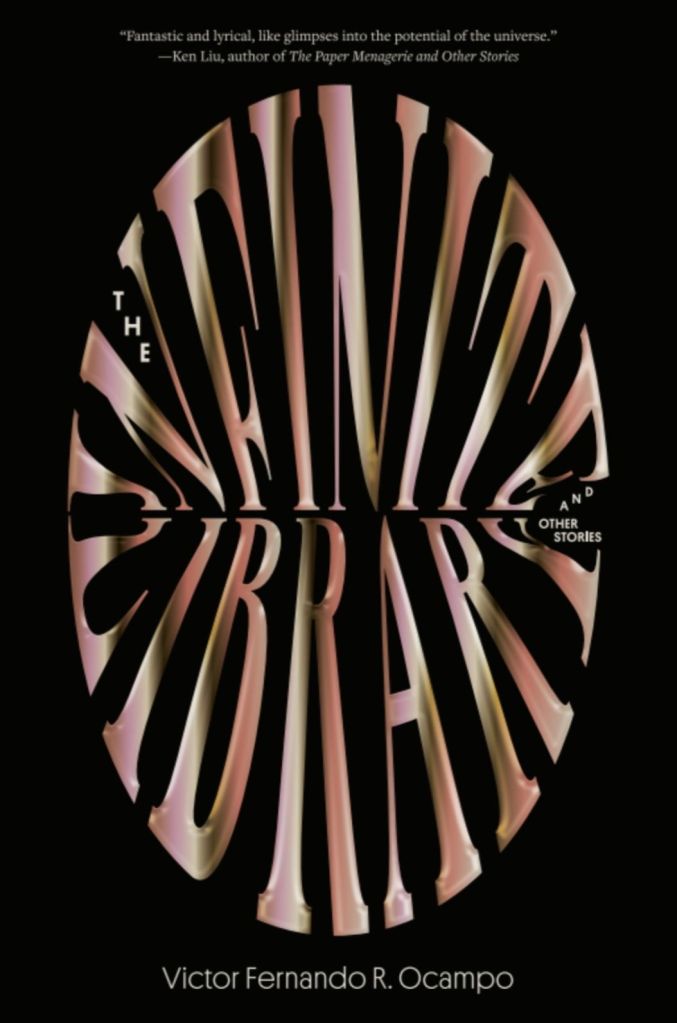
If you are going going to the 2024 AWP (Association of Writers & Writing Programs) Conference & Bookfair in Kansas City, Missouri this February 7–10, don’t forget to get a copy of my book, The Infinite Library and Other Stories, as well as all these other great books by outstanding Asian authors!
The AWP Conference & Bookfair is the annual destination for writers, teachers, students, editors, and publishers of contemporary creative writing. It includes thousands of attendees, hundreds of events and bookfair exhibitors, and four days of essential literary conversation and celebration. The AWP Conference & Bookfair has always been a place of connection, reunion, and joy, and we are excited to see the writing community come together again in Kansas City, Missouri in 2024.
Nothing tests the strength of acceptance and belonging more than speculative universes where characters of no relation come together. Add unexpected life-changing adventures in stories, and you get a mishmash of misfits and reluctant heroes, forging unbreakable bonds. Three science fiction and fantasy writers muse on found families, unconventional relationships, and how we can find human connection in the most unlikely corners of existence.
Steampunk and cyberpunk have been the OGs of their sci-fi subgenre, but it looks like there are some new kids in town! Taking a look at young ‘punks’ like dieselpunk, biopunk, and even… oceanpunk(?!), we unpack the ‘punk’ suffix and why it has spawned so many variations. Is it a fetishising of technology or a commentary on technocracies out of control? What kind of tensions do they invite with our past and future? What ties all these punks together and what new punks are being born?
This workshop is for writers passionate about Asian science fiction and working towards publication in the genre. After a brief survey of SF written by Asians in Asia and the diaspora, I’ll discuss the nuts and bolts of craft including pacing, structure, and revision, as well as diving into topics of particular importance to science fiction authors, such as how to do research for authenticity, worldbuilding, incorporating scientific concepts and advanced technology and how to do revisions. Lastly, I’ll talk about the publishing process and the current science fiction market for short, medium, and long form fiction. The goal is for you to leave the workshop energized with a plan for writing and submitting your work.
Reading and Writing Asian Science Fiction by Victor Fernando R. Ocampo, in partnership with the Singapore Book Council Date: 14 October 2023 Time: 10am to 1pm Place: SBC Training Room 90 Goodman Road BLK E, #03-32 Cost: SGD$60; Register here
Science Fiction written by Asians living in Asia or in the diaspora, are enjoying a renaissance with authors like Cixin Liu, Hao Jingfang, R.F. Kuang and Yoon Ha Lee (among many others)frequently on the top of many best seller lists. As a writer passionate about speculative fiction, how do you create fiction that doeesn’t fall back on the tropes of exocticism and techno-orientalism? This workshop is an introduction to the exiting world of Science Fiction written in Asia. It also aims to help you develop stories that utilize your own lived experience to build your own vision of the future instead of being the futuristic “other” for Western (White/CIShet) audiences.
Objectives:
Understand what exactly is Science Fiction and what makes up the genre.
Learn the elements of what makes a good short story
Not too long ago, the business of creativity was a uniquely human endeavor. However, with the arrival of generative AI, this has started to change. With how entrenched Artificial Intelligence has already become everywhere else in our lives (job automation, search engines, shopping recommendation engines, games, self-driving vehicles, etc.) this intrusion into the Arts was perhaps inevitable — even as various creative communities have tried their best to resist it.
However, I believe that the best response to this AI onslaught is not simply adopting an anti-technology stance, but rather to provide more education to fight disinformation and fear. The best way to defend the all-important human component of creativity is to understand AI’s accompanying threats and challenges — as well as to identify potential opportunities that this technology can bring.
Once we understand how it works and what is to change and how, we can be better prepared to use it where it can do the most good without stealing our work. Education also allows us to lobby for the right laws and regulations, and perhaps also for a future where the Arts include properly attributed and more nuanced human–machine collaborations (if we choose to allow it).
I was initially reluctant to be a part of Singapore Polytechnic’s AI Manga creating challenge, but I am glad that I did because I realized that it was an ideal platform to provide a comprehensive introduction on how to use AI tools like ChatGPT and Midjourney in creative work – particularly in ideation, editing and revision; as well as to discuss its merits, ethics, legality (How does it affect your copyright?) and dangers (potential plagiarism). It was also a great way to teach kids that automation by itself produces sub-par work (humans will always be important), and that the current buzz words like being “a master of prompt engineering” is useless in the long run because the of how fast technology changes (It’s much better to learn how to formulate problems instead.)
This workshop, held last 25 October, was designed to introduce generative AI and its applications in manga and comics creation. Participants delved into the world of AI-generated comics content (e.g. Cyberpunk Peach John by Rootport [Tokyo, Shinchosha; 2023] ) and learned how to leverage generative AI models to enhance their storytelling, character design, and visual elements. By the end of the course, students would have hopefully been armed with the knowledge and skills to use generative AI responsibly, and how not to feed the thieving devil that is automation from stealing their ideas.
AI has become such a contentious topic among artists and writers (- and with the way that late-stage capitalism has abused it so much for profit at our expense,, only rightly so). But at the end of the day, it’s really just another tool which we, as creatives, should at least be educated about in order to decide when and how to use it.
At the moment, there is too much hype, disinformation and fear. As creators in the 21st century, we should consider all the tools at our disposal to create our best work, while at the same time fighting for the rights of creative workers and the importance of the human component in Art for society’s common good.
Thank you again to Singapore Polytechnic’s Media, Arts & Design School, the River Valley Irregulars and the Difference Engine Comics publishing house for inviting me to be a part of this project.
This article first appeared on my channel on Medium last 23 June 2023.
I have always struggled to find time for writing my fiction. If I wasn’t at a full-time job, I was running my technology consultancy or boot-strapping another start-up, all the while doing my share of the housework and raising our kids.
For many writers — whether seasoned or aspiring, the daunting challenge of finding time to write while juggling everything else can feel like trying to fit an elephant into a teacup. Yet, amidst the chaos of deadlines and obligations, there’s a secret that I’ve discovered: you can’t actually find time, you have to carve it out and claim it. Let me tell you how.
The Procrastination Puzzle
Many times, I catch myself putting my writing off, to the end of the day, the end of the week, or worse, to the tail-end of the next hectic holiday in my calendar. If we really love the act of writing, why on earth do we put off to the very last minute? Perhaps it’s the fear of facing a blank page? Or is it perhaps the allure of an endless doom scroll online that’s too difficult to resist?
Regardless of the reasons, recognizing our procrastination patterns and why we put off writing is the first step toward overcoming them. Look through my Medium articles for my suggestions on how to deal with writer’s block. TikTok too hard to resist? Use doom scrolling time as a reward for completing a time-based writing goal.
The next crucial step is to consciously put aside the time to write. Here are some of my suggestions on how to carve out some real time:
Rise and Scribble: Embrace the early morning hours when the world is still groggy, and your creative mind is fresh. Set the alarm, brew a strong cup of coffee, and allow the words to flow before the day commandeers your attention.
Lunchtime Liberation: Break free from the clutches of mundane office lunches! Use your midday break to escape to a nearby park or cozy café, armed with a trusty notebook or laptop. Indulge in a sandwich with a side of prose or a bowl of noodles sprinkled with metaphors. Your colleagues will just think you are having a working lunch.
Commute Chronicles: Transform your daily commute into a fertile ground for inspiration. Instead of mindlessly scrolling through TikTok, observe the world around you. Eavesdrop on snippets of conversation, imagine the lives of fellow commuters, and jot down these fleeting glimpses of humanity. Your train ride might just become a writer’s dream. Another helpful tip — you can actually edit on your phone by emailing yourself your manuscript. The change in screen size will help you spot errors faster.
Stealthy Scribbling: Do you get writing ideas at awkward times? Use a small notebook or note pad application on your phone to quickly record your ideas. These notes will prove very valuable next time you need writing ideas.
After-Hours Haven: Instead of surrendering to mind-numbing television marathons, designate specific evenings for uninterrupted writing. Dim the lights, fuel your imagination with a writer’s snack (or good coffee, tea, or the libation of your choice), and let your imagination run wild. Apologies to Netflix, but you have a story to craft.
In the dance between a full-time job and a burning desire to write, time management is the choreography that sets us free. By understanding why we put off our writing, and employing creative strategies to carve out writing moments, we can unravel the enigma of productivity.
So, dear aspiring writers, let us don our pens like swords and march into battle against the ever-ticking clock. Remember, with a sprinkle of humour and a touch of audacity, the words will find their way to the page, and the world will be richer for it. We all have stories inside us. Now, go forth and conquer the teacup-sized elephant of time!
PS. If you haven’t done so yet, please follow me on Medium. Thank you!
Very pleased to announce that The Infinite Library and Other Stories is now back in print in Singapore! You can get it online at https://lnkd.in/gf78f56Z
“Ocampo’s collection is simultaneously a meaningful addition to the genre of speculative fiction and a powerful manifesto laying out the possibilities of Southeast Asian literature.“ – Elise J. Choi, book review for Necessary Fiction
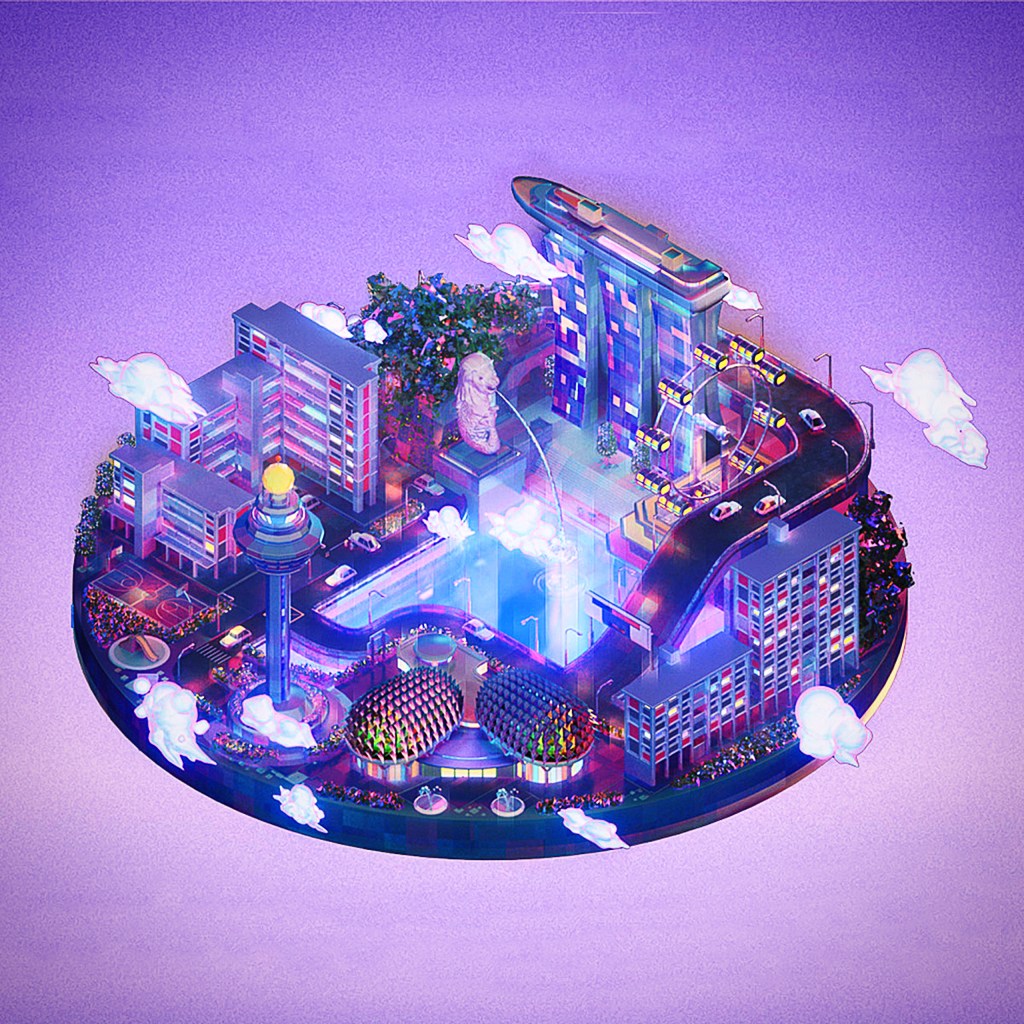
Thank you to Olivia Ho for including my short story “Big Enough for the Entire Universe” in her article “Pocket Cities in Singapore Speculative Fiction”. This story first appeared in the OG Fish Eats Lion anthology (Math Paper Press, 2012) edited by the inimitable Jason Erik Lundberg .
Thank you to Singapore’s Creative Arts Program (CAP) and the Ministry of Education for inviting me to run a workshop on Interactive Fiction with some of the most gifted and creative secondary school students in Singapore.
The workshop was held at the Nanyang Academy of Fine Arts last 30 May 2023. I had the pleasure of working with 16 students whose ages ranged from 13 to 17.
The objectives were:
Learn what is Interactive Fiction, it’s forms and history
Understand the principles of interactive storytelling
Learn how to structure interactive fiction
Be able to build a branching narrative
Along the way we talked about electronic literature, hypertext, adventure-based and puzzle-based text games, choice-based interactive fiction, visual novels, conversational agents as well as Web 3.0 interactive fiction such as Art Roleplay Games. We also discussed everything from Jorge Luis Borges’ “The Garden of Forking Paths” (which inspired the concept of hypertext), to early interactive fiction narratives like Will Crowther’s Colossal Cave Adventure, Trubshaw and Bartle’s Multi-User Dungeon, and Douglas Adams’ Hitchiker’s Guide to the Galaxy, to visual novels like Steins:Gate, Doki Doki Literature Club and Disco Elysium. We even managed to talk about local Singaporean projects such as Catherine Lim’s very early internet novella The Leap of Love (Lycos Asia, 2000) and Benjamin Chee and Wayne Rée’s Internal Damnation, an interactive fiction companion piece to their seminal Work-LifeBalance graphic novel (Difference Engine, 2022)
I was pleasantly surprised that one of the kids had actually read and liked my blockchain ride and die story on Fish Eats Lion Redux. Happy that my work isn’t as obscure as I think it is.
Looking forward to seeing one of these kids develop a crazy good Interactive Fiction narrative in the future!
‘Not all were asleep in the night-time of our grandparents’.” —The Philosopher Tasio, in Noli Me Tangere.
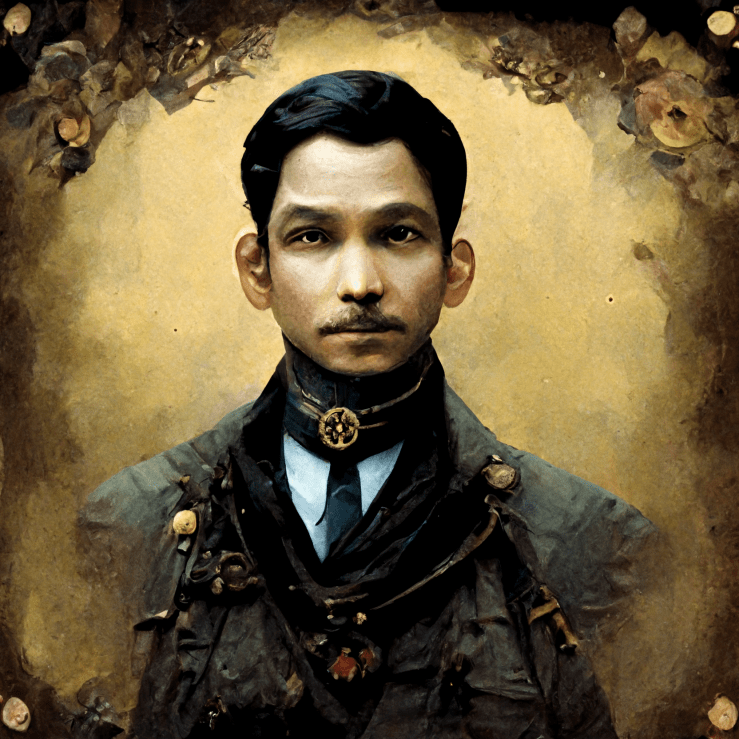
National hero Jose Rizal wrote “Filipinas dentro de cien anos” (“The Philippines a century hence”), a socio-political essay written in four parts, for the magazine La Solidaridad, from September 1889 to-January 1890. In it he attempted to predict the country’s future by outlining several scenarios for how the Philippines might evolve over the next century.
As a technology practitioner, I had wondered how an AI instructed to answer like Jose Rizal and (updated with inputs from historian) Yuval Noah Harari would answer the prompt: “What would the Philippines be like in 100 years?” I have reproduced the answer below without any modifications or corrections. Of course, given how generative AI like ChatGPT generates their answers from limited and skewed existing information, this answer needs to be taken with a VERY big grain of salt.
However, the resulting short essay is both thought-provoking and honestly, sad — in the very same way that Gregorio Brillantes’ seminal short story, “Apollo Centennial”, was. Will we ever see change? Even an AI doesn’t seem to think so.
The Philippines in 2123: Exploring the Top 5 Challenges of its Future
Introduction:
Looking ahead to the year 2123, the Philippines faces a myriad of challenges that could significantly shape its future. This speculative essay examines the top five issues that are likely to confront the country: economic disparities, entrenched political dynasties, the persistent intertwining of Church and State, increasing encroachment by China, and a high net emigration rate. While the road ahead is riddled with complexities, drawing lessons from Philippine history and its regional neighbors allows us to make realistic projections on the potential trajectory of the nation.
Economic Disparities and Inequality:
Despite making strides in economic growth, the Philippines continues to grapple with significant income disparities. This issue is rooted in historical factors such as colonial exploitation, widespread corruption, and a lack of inclusive policies. The persistence of an unequal distribution of wealth poses a challenge to social cohesion, leading to social unrest, political instability, and a potential threat to the country’s stability.
Historical examples, such as the Hukbalahap rebellion in the mid-20th century, highlight the consequences of unaddressed economic disparities. If left unaddressed, the Philippines may face continued regional social unrest, exacerbating the potential for a failed state scenario, particularly the possibility of splintering the nation into separate polities.
Entrenched Political Dynasties:
The prevalence of political dynasties in the Philippines is a deeply ingrained issue that has hindered democratic development and contributed to systemic corruption. The concentration of power within certain families perpetuates nepotism, patronage politics, and a lack of policy continuity. This phenomenon poses a significant obstacle to effective governance and public service delivery.
Lessons from Philippine history, such as the Marcos regime’s abuse of power and rampant corruption, underscore the dangers of uncontrolled political dynasties. Without comprehensive political reforms and a genuine commitment to democratic principles, the Philippines may continue to struggle with governance challenges, impeding progress and perpetuating a feudal mentality within its polity.
Inability to Separate Church from State:
The persistent intertwining of Church and State in the Philippines presents another challenge to modern governance and societal progress. Despite a constitutional provision mandating the separation of Church and State, religious institutions continue to exert significant influence on political affairs, policy-making, and social norms.
Philippine history, notably the influence of the Catholic Church during the Spanish colonial period and the People Power Revolution in 1986, exemplifies the consequences of religious interference in politics. The inability to strike a delicate balance between religious freedom and secular governance may hinder the country’s ability to adapt to a rapidly changing world and contribute to societal divisions, potentially undermining stability.
Increasing Threat from China:
The geopolitical dynamics of the region have a profound impact on the Philippines’ future. China’s assertive posture in the South China Sea raises concerns about territorial disputes, economic coercion, and potential military confrontation. The Philippines, with its strategic location, its rich marine resources – not to mention its special relationship with the United States, finds itself in the crosshairs of this power play.
Looking to the experiences of neighboring countries like Vietnam and Singapore, which has faced similar challenges, we can anticipate that the Philippines will need to carefully navigate its relationship with China to safeguard its sovereignty and economic interests. Failure to do so may result in a compromised national security apparatus, reduced access to vital resources, and limited opportunities for economic growth.
High Net Emigration Rate:
The persistent phenomenon of high net emigration poses a significant challenge to the Philippines’ future. Economic opportunities, political instability, and social unrest have historically driven waves of Filipino emigration, leading to brain drain and the loss of skilled human capital. This exodus deprives the country of talent, stifles economic growth, and further exacerbates inequality.
The experiences of neighboring countries like the Philippines’ diaspora in the United States and the Middle East provide valuable insights into the potential long-term consequences of high net emigration. To mitigate this challenge, the Philippines needs to address the root causes of emigration (such as poorly planned and managed infrastructure), invest in education and job creation, and establish favorable conditions for talent retention.
Will the Philippines Become a Failed State?
While the challenges discussed above are formidable, it is essential to approach the question of a failed state scenario with caution. The future of the Philippines hinges on the ability of its leaders and society to tackle these issues head-on, drawing from historical lessons and regional experiences.
The Philippines has demonstrated resilience in the face of adversity throughout its history, including successful democratic transitions and significant economic growth. However, the path towards progress and stability requires concerted efforts to address economic disparities, reform political structures, ensure secular governance, protect national interests, and invest in human capital.
Ultimately, the fate of the Philippines rests in the hands of its people and leaders. By embracing inclusive governance, fostering economic development, promoting social cohesion, and actively engaging in regional diplomacy, the Philippines has the potential to overcome these challenges and forge a future that ensures stability, prosperity, and avert failure.
In conclusion, the Philippines will face a myriad of challenges in the coming century. While the path ahead is uncertain, valuable lessons from Philippine history and regional experiences offer a roadmap for addressing these issues. By embracing inclusive policies, reforming political structures, promoting secular governance, protecting national interests, and investing in human capital, the Philippines can strive to overcome these obstacles and avoid the specter of a failed state.
Disclaimer: This hypothetical essay was written entirely by ChatGPT and does not reflect my own views on the future of the Philippines, a topic which I feel is much more complex than what is possible to contain in such a short piece.





 The Infinite Library and Other Stories