New SF Story “Blessed are the Hungry” in Apex Magazine

Very excited to announce that I have a new SF short story “Blessed are the Hungry” in issue 62 of Apex Magazine – http://www.apex-magazine.com/blessed-are-the-hungry/

It’s a social realist tale set in a Generation Ship ruled by a brutal theocracy, featuring aliens, anting-antings, robot dogs, edible plastic and a headstrong young girl as a protagonist.

They also did a nice little interview in the same issue – http://www.apex-magazine.com/interview-with-victor-fernando-r-ocampo/

Image

Cover art by Ashley Mackenzie.

An Excerpt from “Entanglement” in the second issue of LONTAR

Here’s a short excerpt from my story of a tainted, post-singularity love affair between an American-born Chinese kid and a Filipino-Singaporean ghost. It appears in the second volume of LONTAR: The Journal of Southeast Asian Speculative Fiction (Edited by Jason Erik Lundberg and Kristin Ong Muslim for Poetry).

Image

My inspiration for this strange little tale was  (indirectly) a 1944 movie by George Cukor called “Gaslight“, starring Ingrid Bergman, Charles Boyer and Joseph Cotten. The film was the basis for the term “gas-lighting”, a type of mental abuse where false information is given with the intent of making a victim doubt their memory, perception, or sanity.

“Entanglement” is set in the same universe as “Big Enough for the Entire Universe”  and takes place a decade or so after a great technological disaster befalls Singapore.


“Did you just transfer recently? I can’t believe I hadn’t noticed you before,” I said carefully, trying not to be distracted by your ethereal form and your beautifully endless eyes.  “I’m an American-born Chinese myself. I thought I knew all the Asian kids at school. Dang, I would’ve definitely noticed a fresh freshasaurus like you.”

“Do you like cats?”

“Err… yeah I love cats. I have one at home. Why?”  I was amused by your attempt at misdirection.

“Cats dislike change without their consent. I think we end when I follow a cat.”

“So did you have a cat where you’re from, umm… Singapore right? Are you Singaporean Chinese?”

“No, I am Filipino Chinese,” you said unexpectedly, confident of your mythology, “but born in Singapore, raised in Singapore too.”

“So does that make you Singaporean or Filipino?”

“Both and neither, does it matter? I am like Schrödinger’s cat.”

“Yeah, well in these parts your identity’s very important. I mean with the new Immigration laws and everything,” I said. “You are a gorgeous Chinese girl. You’re now American and living in America. Let’s fix on that before someone else is all over you.”

I am Filipino. I am Singaporean… I am confused,” you told me, as your inner light started to dim. When you looked into my eyes, I knew I had your soul dead to rights. We were now entangled.

“Just listen to my voice,” I repeated gently. Programming deep structures was about repetition, iteration; introjection. “You are a girl, a dang pretty one. You’re also an ABC like me.”

I… I am a… I am a gorgeous Chinese girl. I am an American in America.”

Truth to tell, I first thought you had Asperger’s or some weird mental wallering going on. To deal with your baggage, the remains of your mind, was challenging. Yeah, you were quite the cattywhompus, playing your shattered angel bit very, very well. I guess it was your way to firewall me, to resist me, a smoke screen to keep your pretense of identity.

Too bad for you, I knew you were a blank slate and I was El Hacedor, The Maker.


For the entire story, as well as other Southeast Asian speculative fiction by E.C. Myers, Tiffany Tsao, Jerrold Yam, Tse Hao Guang, Ang Si Min, Shelly Bryant, Daryl Yam, Eliza Chan and John Burdett,  please  check out the E-book at Weightless Books.

n.b. Lontar Issue #2 was mentioned recently by Boing Boing.
Some thoughts on Science Fiction in the Philippines

(Part 1 of a 2-part article on Filipino Science Fiction)

Of all forms of literature Science Fiction is the only one that primarily concerns itself with imagining the future. As a recent article in Smithsonian Magazine pointed out, SF deals with “thinking about what’s to come for civilization”. For writers it is, as Ursula K. Le Guin points out, “a safe, sterile laboratory for trying out ideas” and “a means of thinking about reality, a method.”

The history of humankind is one of a mixture of gradual and accelerated changes -– social, intellectual and technical, where each small change can lead to a multiverse of possibilities and it’s the job of Science Fiction to contemplate these possibilities and consider their potential consequences.

However Science Fiction isn’t written in a vacuum, it remixes past history with the ideas of tomorrow to examine the very real problems of today. Each country in the world has a different past, as well as a different set of problems and circumstances. Each also has a unique set of alternative futures.

For a nation to progress, to move forward, it is first necessary to dream about where it can go (as well as the scenarios it needs to avoid). Science Fiction is fertile ground for this type of thinking and this is why it’s important for every nation to create its own body of suppositional fiction.

This is particularly true for post-colonial developing nations like the Philippines. The bulk of Science Fiction comes from the United States, the UK and Japan (the latter primarily for anime and its derivatives). The outlook and point-of-view of such culturally dominant narratives is imposed on the rest of the world simply because it’s the only one readily available in the market.

The Philippines (and by extension the rest of the world) needs its writers to add their voices to what should be a multi-ethnic, multi-perspective chorus. Never mind that the international market prefers “western-style SF” at this time. Never mind that very few Filipino writers can write without any vestige of western colonialism. The country needs more stories to define the future it wants and deserves.

sky gypsies-600x600

Cover illustration for the comic book adaption of Timothy Dimacali’s Sky Gypsies with art by John Bumanglag

Why isn’t there more Filipino Science Fiction? Putting aside the bias against the literature of the Fantastic that had persisted in the country for decades, the main excuse given is that the Philippines isn’t “high-tech” enough; that it “does not have a tradition of discovery, exploration and scientific thinking” and that high technology exists apart from experience of the everyday Filipino.

While this may have been true half a decade ago, the mobile digital revolution has placed powerful networked computers literally in the pocket of most everyone in the Philippines. Many Filipino kids today have never stepped on a farm, never owned a carabao (i.e. water buffalo, that staple of many a Filipino short story), and probably wouldn’t know what to do with one unless the animal came with a mobile app. This is not to demean those who are marginalized or those work in the agricultural sector, it’s just that we also need other kinds of stories. Besides, discussing politics and social issues are essential to serious Science Fiction. It’s not really the content that needs to be expanded – it’s the form.

Whatever “literary technophobia” that had haunted older authors should mean nothing to new and emerging writers who have to reference technology no matter what kind of story they create simply because technology has become so entrenched in Filipino daily life.

In any case it’s a fallacy that Filipinos needs to have some kind of indigenous tradition of hard science to write Science Fiction. Did the country need to have a local tradition of rock and alternative music to develop the Original Pilipino Music (OPM) industry? No. Yet great Filipino rock bands like Eraserheads exist.

Lastly, despite the “science” in the name, Science Fiction isn’t always about Science anyway (see Aldous Huxley’s Brave New World, Stanislaw’s Lem’s Solaris and most of Margaret Atwood’s work). As David Brin said “Science fiction is badly named — it should have been called speculative history… Whether you are in a parallel reality or exploring the future, it is all about the implications of change on human lives. The fundamental premise of sci-fi is not spaceships and lasers — it’s that children can learn from the mistakes of their parents.”

It’s about dreaming the future.

In fact it’s time for the Filipino to dream a multiplicity of futures. It’s time to figure out where we want to go as a nation (because you really wouldn’t want the politicians and/or showbiz personalities to do it for you). It’s time to create our Science Fiction.

Now open your word processor. Whip out that note pad. Let’s write.

The first post won’t hurt at all

I never thought that I would ever get anything published.

As a kid in Manila all my stories were rejected simply because they were Science Fiction or Fantasy and publishers didn’t want them. The Filipinos that did read the “Literature of the Fantastic” preferred American or European authors due to a lingering colonial mentality and/or because nothing else was actually available. Save for Japanese cartoons, half-forgotten myths and the occasional meanderings of local realist writers into the surreal, there were no Fantasy, Horror or Science Fiction authors in the Philippines (at least none whose works were readily available). There were also no venues to read or to submit such stories.

I stopped writing for a very long time. Over the next few years I finished school, left the country and started a family. But I never stopped hoping I would find writers outside the Western mainstream, authors who would write Speculative Fiction with my voice, my experience and my point of view.

Then something magical happened early in the new millennium. Because of the efforts of people like Dean and Nikki Alfar, their Litcritters crew, Paolo Chikiamco, Joey Nacino,  Rochita Loenen-Ruiz, Charles Tan, Eliza Victoria, Kenneth Yu and other pioneers,  venues like the Philippine Speculative Fiction anthology series, Philippine Genre Stories and Story Philippines started to appear and somehow, in a way I had not expected, Fantastic stories in all of their strange and delicious flavors became accepted, became (comparatively) popular, and most importantly, became respected.

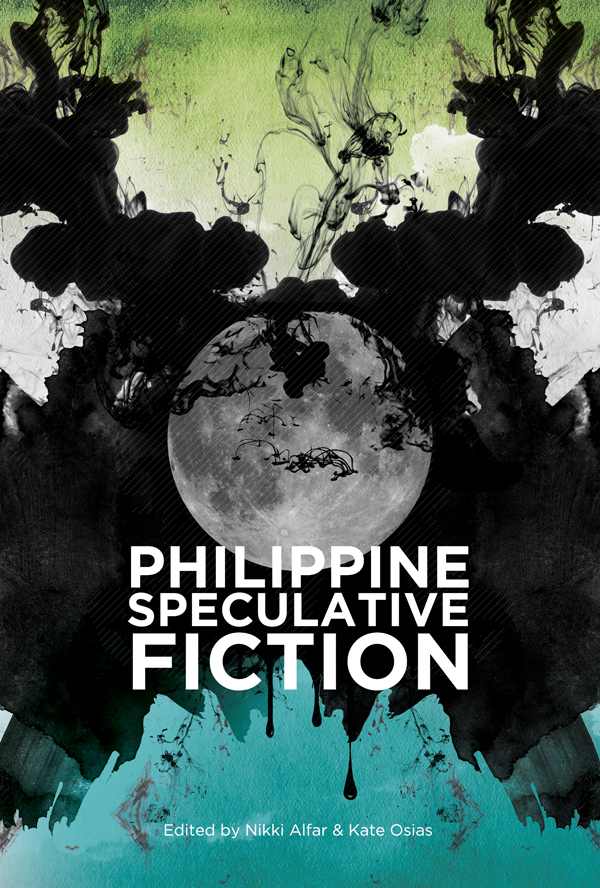
My wife sent one of my stories to Nikki Alfar and Kate Osias without my knowledge (cheeky girl but I love her so).  To my great surprise it ended up in PSF volume 6 and I haven’t stopped writing (or submitting) since.

cover-PSF6

Later on, I discovered that this renaissance of sorts was also happening (with various degrees of success and acceptance) in many parts of the world outside the Western sphere of influence — including my adopted country of Singapore, where I was lucky enough to become part of Fish Eats Lion (Edited by Jason Erik Lundberg) arguably its first compilation of literary Speculative Fiction.

The Literature of the Fantastic in Southeast Asia is breaking out of the shadows and I am so happy to be part of to this evolving landscape.  I hope you like my stories (particularly the Science Fiction ones) and I would really love it if you dropped me a line at the comments box below or at  vrocampo (at) gmail [dot] com.

Thank you!

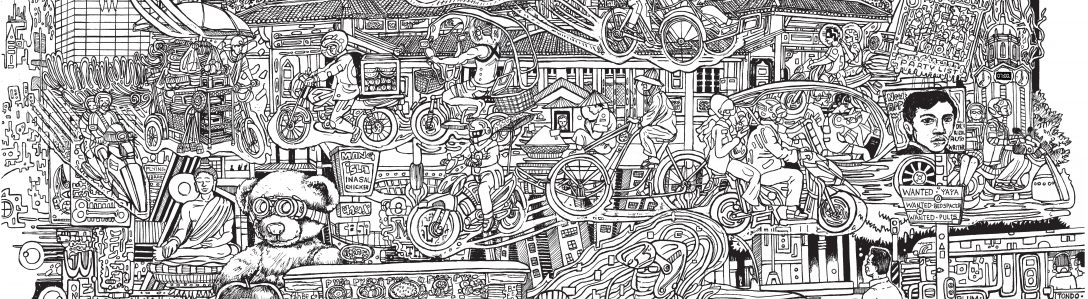
Artwork above by Jon Jaylo from the book “Here be Dragons”