As someone who writes professionally about technology and writing, I’ve decided to make my non-fiction work available under my own name instead of under a corporate by-line.
Medium is an excellent platform to showcase your work and reach a wider audience. With its vast user base and diverse range of topics, it provides a unique opportunity to connect with like-minded individuals and engage in meaningful discussions. In my case it’s about the latest trends in emerging technologies like Web 3.0 and how this will affect the writing and publishing industries.
If you haven’t done so yet, kindly follow me on Medium. Please also leave comments, subscribe to my feed, or share it with your friends and colleagues. Your support is what keeps me and my always-hungry smol sales dog (pictured below) motivated to create more high-quality content. Together, we can continue to learn and discover new things. Thank you for being a part of my community!
Expressive creative writing can help you regain your mental clarity and give you the ability to take healthy, productive next steps after a sudden job loss.
No matter what you write or how you publish, every author needs to learn about cyber security. In this article, you’ll learn why you need to think about cybersecurity and learn some basic tips to protect yourself.
A digital identity is an online or networked likeness that an individual, organization, or electronic device adopts or claims in cyberspace. From social media accounts to online banking, and across several communities, users need a way to prove who they are really who they say they are in order to navigate safely and securely.
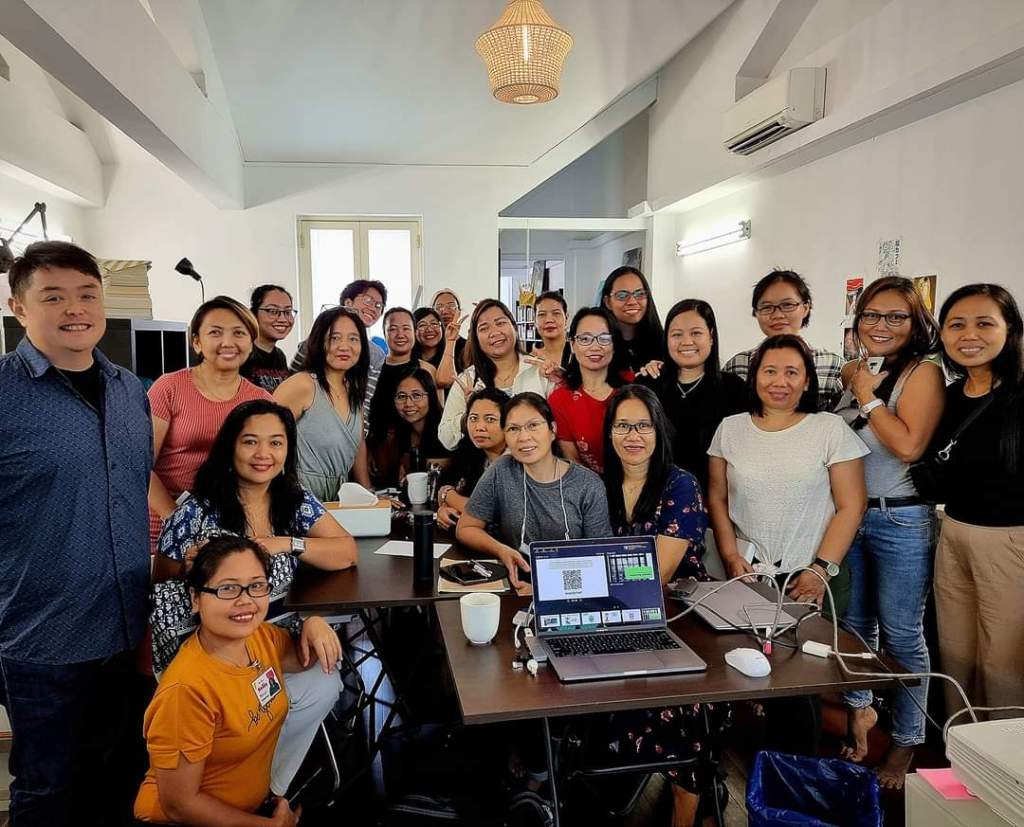
It was a privilege and a pleasure to run two storytelling workshops last 26 February and 26 March for the Migrant Writers of Singapore with SingLit Station. These folks are among the most talented writers I have ever met and are absolutely unmatched in heart.
We Filipinos are natural storytellers. It’s our way of sharing and building our communities, our faith and deepening our connections with one another. Salamat sa inyong lahat!
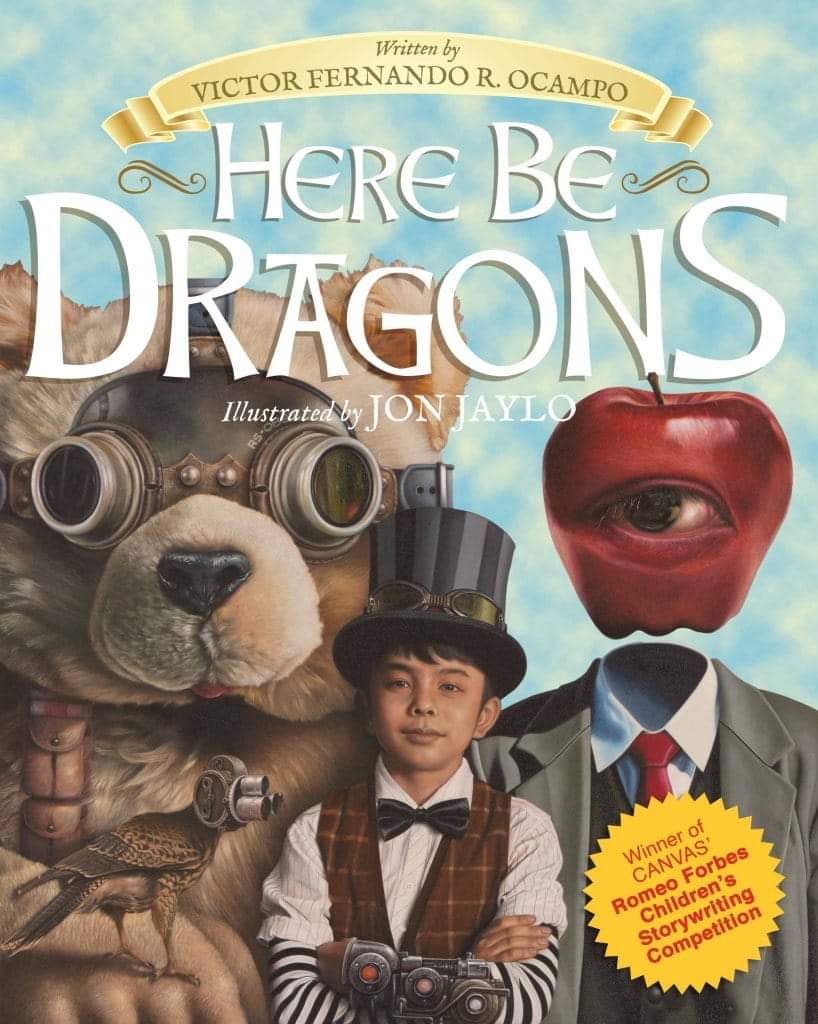
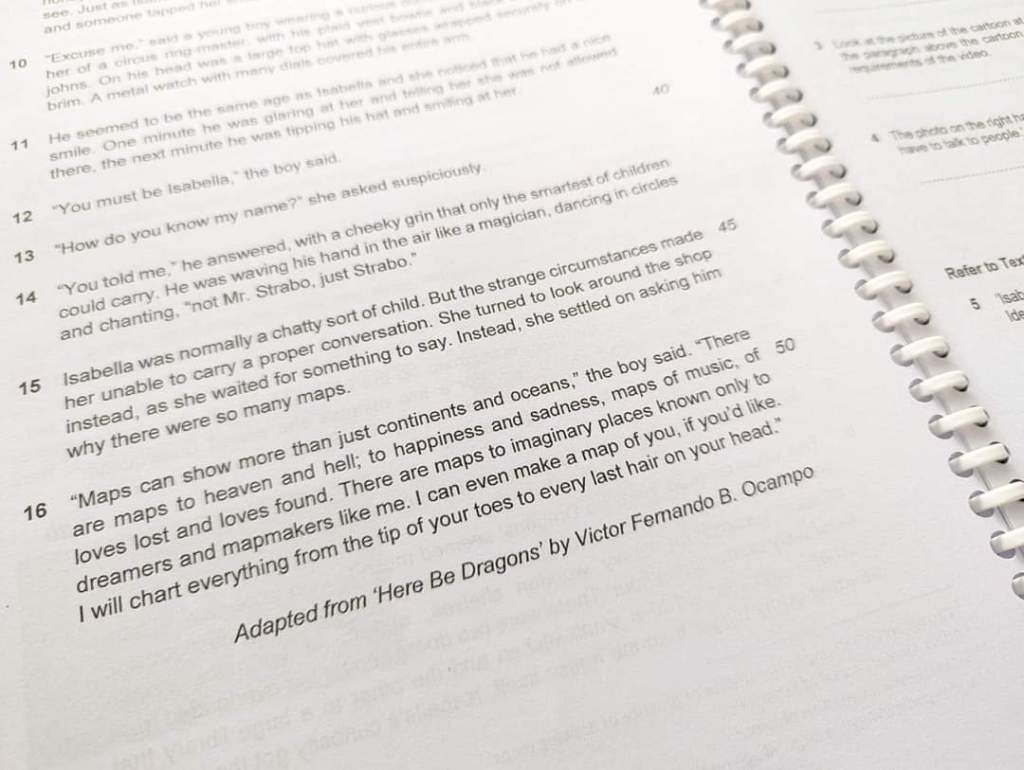
Very pleasantly surprised to learn that Here be Dragons is part of the literature coursework at a secondary school here in Singapore. Thank you to my friend and ex-Yahoo! colleague Janet Leong for the heads up!
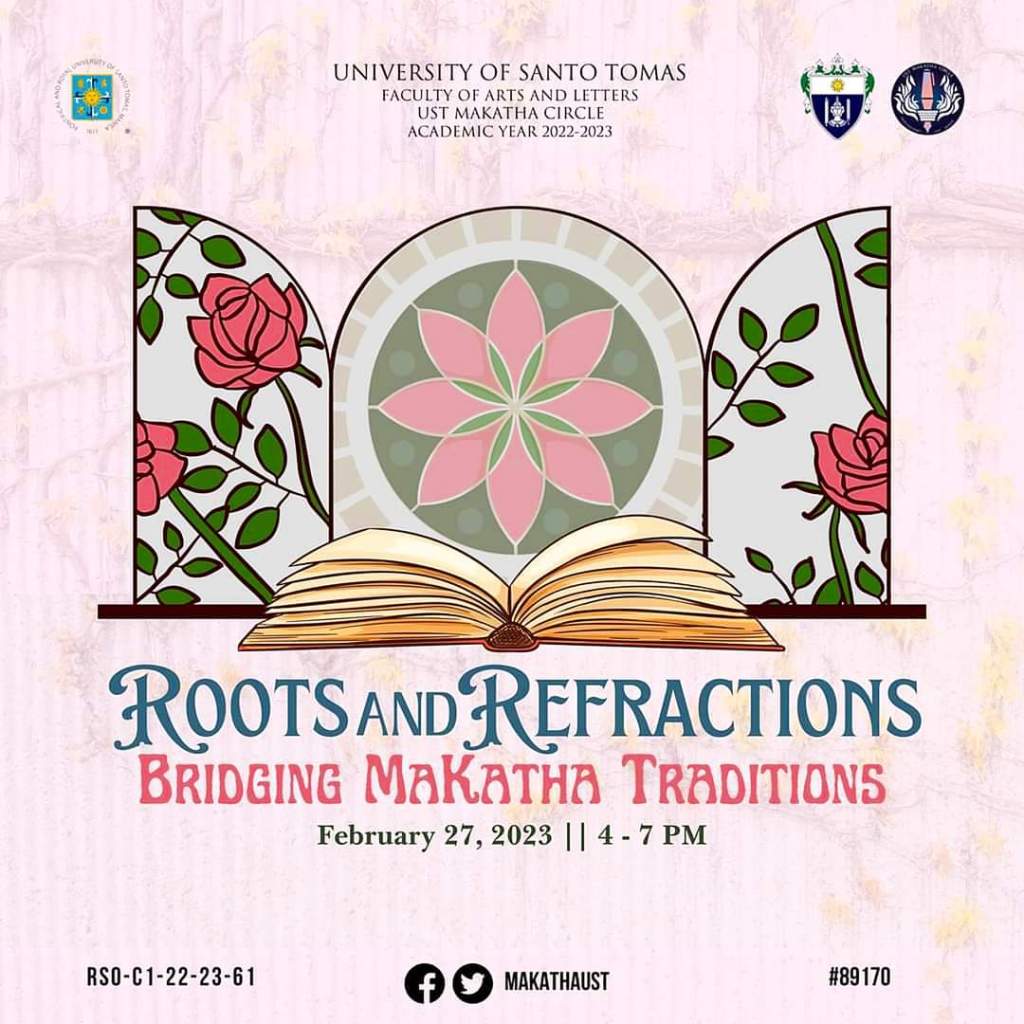
Thank you to the UST Faculty of Arts & Letters and the UST MaKatha Circle for inviting me to share my writing journey at their ” Roots & Refractions: Bridging MaKatha Traditions” event last 27 February. I really enjoyed interacting with so many young writers.
Keep reading what makes your heart sing. Fill yourself up with all the beauty that life throws your way. And keep writing — because young creatives like you are our best defense against all the terrible and ugly things darkening our reality. Once you realize what this world is worth, you will fight to defend it.
Write a new world for all of us…
#MaKaATIN
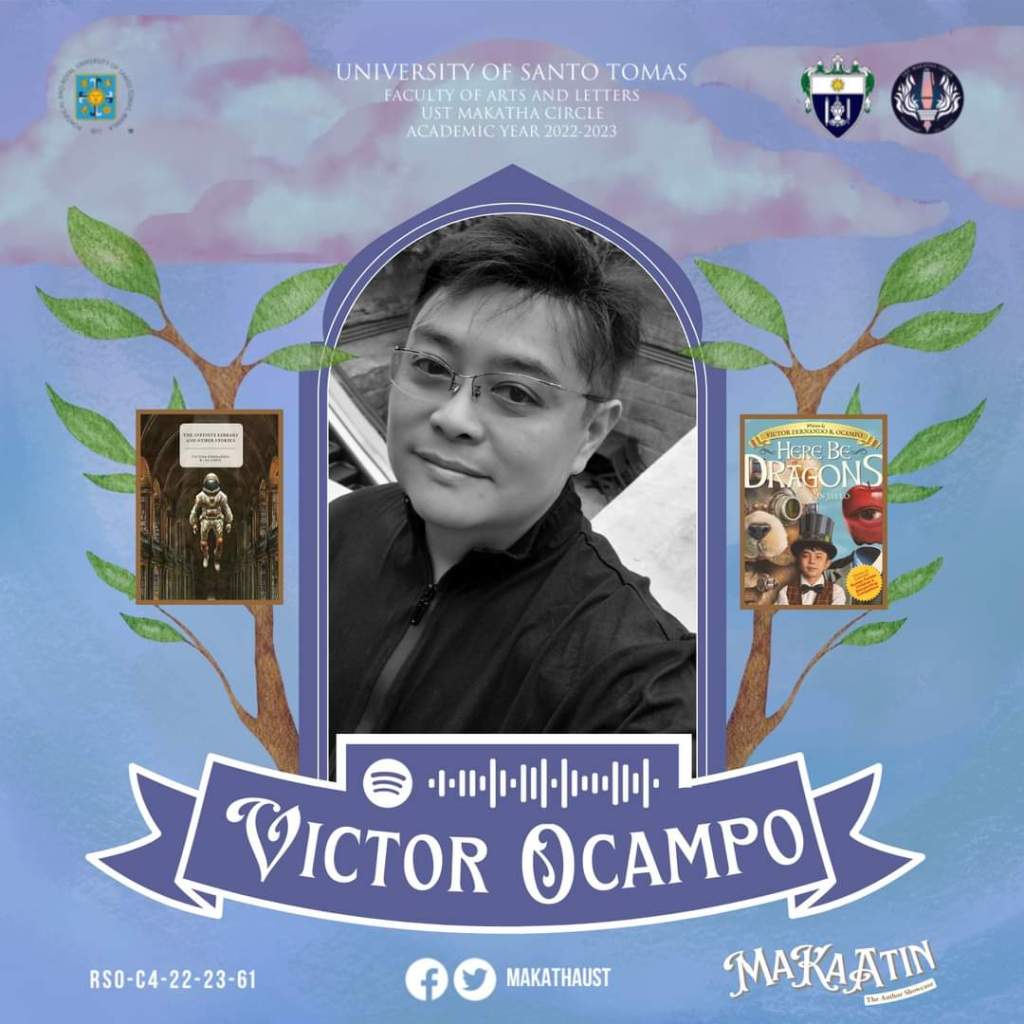
Up next, meet Victor Fernando R. Ocampo, a Filipino author of speculative and experimental fiction stories!
A fellow at the Milford Science Fiction Writers’ Conference in the UK and the Cinemalaya Ricky Lee Film Script Writing Workshop in the Philippines, he currently resides in Singapore where he was also a writer-in-residence at the Jalan Besar at Sing Lit Station. His works have been shortlisted for the International Rubery Book Award in 2018, and he won the Romeo Forbes Children’s Story Award in 2012.
Victor’s most recognized stories include:
THE INFINITE LIBRARY AND OTHER STORIES. Three Filipino siblings fighting an enemy that uses words as weapons, sigbin monsters in space, a banned children’s book hiding a secret that could save a doomed generation ship, a slow-motion disaster turning people into living math equations,?! Name it and this book surely has it. Grab this collection of stories that goes beyond what our mind deems possible and be carried away by all its mystical twists and turns.
Grab a copy:
HERE BE DRAGONS. Ever wished to have a map that would make life easier? Well,
Isabella met the perfect guy that makes a map of just about anything! Would she take the risk
“An Excerpt from the Philippine Journal of Archaeology (04 October, 1916)”, a Lovecraftian metafiction story told in footnotes, first appeared in Likhaan Journal 8 by the U.P. Institute of Creative Writing in December 2014. – https://journals.upd.edu.ph/index.php/lik/article/viewFile/5072/4577
“The Easiest Way to Solve a Problem” is a short story about adding the consciousness of expat Filipino PMET workers to a massive corporate AI in Singapore. It appeared last April, 2022 in the book Get Luckier: An Anthology of Philippine and Singapore Writings (Singapore: Squircle Line Press, 2022), edited by Migs Bravo Dutt, Claire Betita de Guzman, Aaron Lee Soon Yong, and Eric Tinsay Valles. – https://www.get-luckier-anthology.com/victor-fernando-r-ocampo
“I m d 1 in 10” , his experimental story inspired by Anicius Manlius Severinus Boëthius’ De Consolatione Philosophiae, first appeared in the July 2014 issue of The Future Fire (Editor: Djibril al-Ayad). It was written with Latin, L337, IM and SMS speak, emoticons and a Filipino argot called Jejemon. – http://futurefire.net/2014.30/fiction/imd1in10.html
Immerse yourselves in Victor Ocampo’s works with this playlist!
#MakaATIN
#MKC2223
#MakaTraditions
#GrowWithMKC
: Anjellyca Villamayor, and Roanne Aludino
: Chrystal Cariño, Lauren Ainella Tagle, and Sophia Mendoza
The original Fish Eats Lion was one of the first and finest collections of Speculative Fiction from Singapore. I am so happy to be part of both books but it’s also a bit of a shock to realize that I’ve been getting published for so long. I have my editors to thank for this, particularly Jason Erik Lundberg, who edited both books, as well as the sorely-missed Lontar series.
Thank you to everyone who showed up for the launch of Fish Eats Lion Redux at Neo Kinokuniya Singapore Main Store. The Crossroads area was absolutely packed, and we spent about 30 min afterwards signing copies!
Most Filipinos don’t know that the Philippine’s national hero Jose Rizal had quite a few connections to Singapore. In fact in 1896, Rizal’s friends urged him to save himself by remaining here, but sadly, it was not to be…
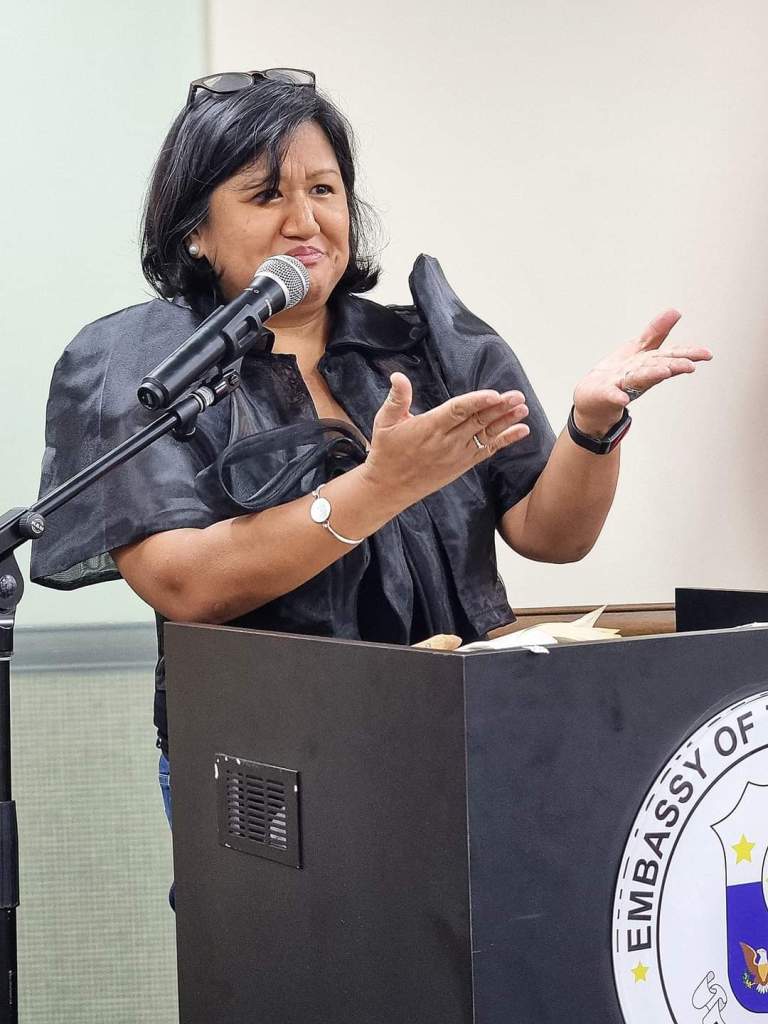
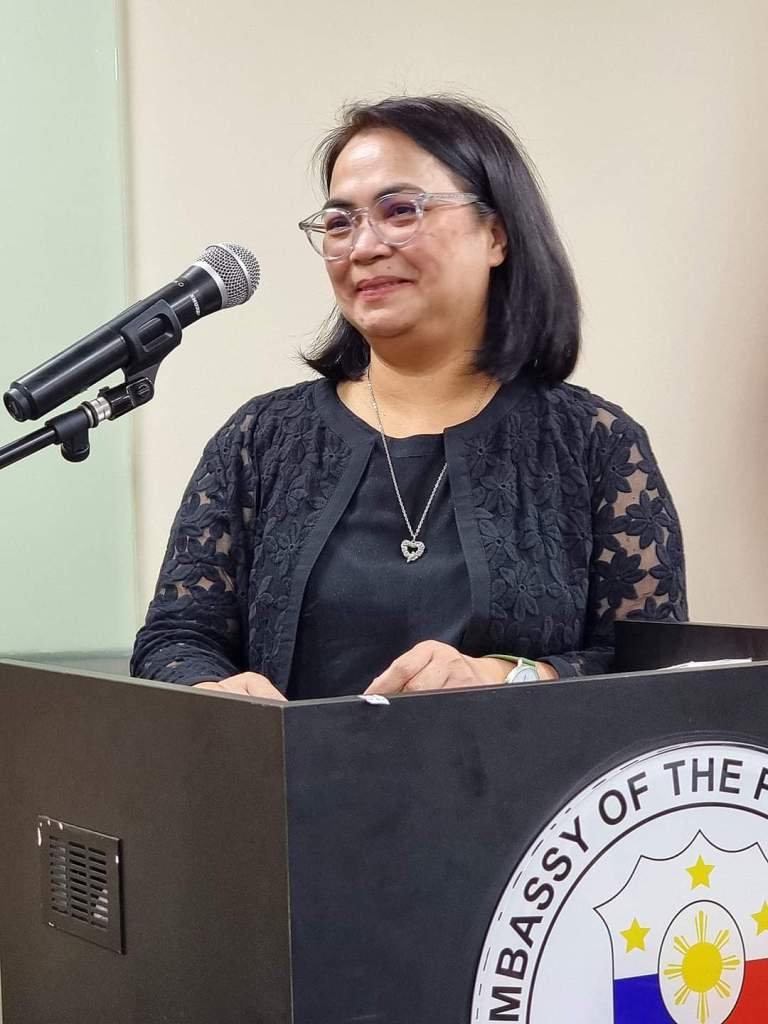
Thank you to the Philippine Embassy in Singapore and Penguin Random House Southeast Asia for hosting today’s celebration of Jose Rizal’s life, writing and his connection to Singapore. Chargé d’ Affaires (and author) Dr. Emmanuel R. Fernandez, his wife Alice and Penguin authors Noelle De Jesus, Migs Bravo Dutt, Mookie Katigbak Lacuesta and Sarge Lacuesta, as well as yours truly, read excerpts from our national hero’s poetry, letters and novels
Afterwards, I moderated a lively panel that discussed Rizal’s influence on Filipino writers, writing from the diaspora versus from the homeland, speculations about a hypothetical third novel, and other interesting topics. If host and cultural attaché Rosellie L. Bantay had not gently reminded us of the time, we would have probably talked for the whole afternoon.
Thanks to Patricia Mulles for the photos below.
Special thanks to Penguin publisher Nora Nazarene Abu Bakar for inviting me! Have a meaningful Rizal Day!
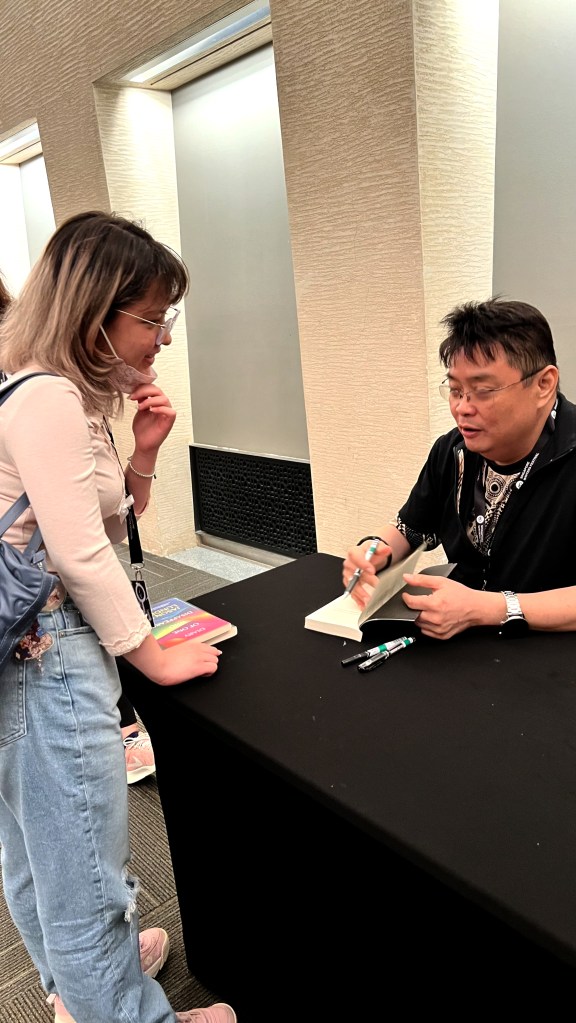
I missed the opening and a couple of key events that I had wanted to attend, but overall this year’s Singapore Writers Festival went well. I was part of three excellent panels and was able to meet so many readers, fellow writers and friends. I finally got to meet the amazing Ted Chiang and Bryan Thao Worra in person. I also got to have dinner with Eliza Victoria and her significant other, Jaykie Lazarte, after such an interminably long time.
Thankfully, I made it back in time for my next panel Just The World I’m Looking For: The Multiverse and Fictionon November 12, which was with Meihan Boey, Nuraliah Norasid, myself and our always-excellent moderator, Jason Erik Lundberg. We talked about hos using the concept of the multiverse was a great tool for elucidating possibilities regardless of the genre you were writing (although one person in the audience was mildly disappointed that we didn’t dwell on comic book multiverses). This was followed by a book signing, where I was informed by Closet Full of Books that all copies of The Infinite Library and Other Stories had sold out.
I met up with award-winning US-based Lao poet Bryan Thao Worra for lunch on Saturday, 12 November. We had been corresponding for a few years but this was the first time we met IRL. Bryan has served as the president of the International Science Fiction and Fantasy Poetry Association and is the author of over 8 books of poetry. We talked shop for about two hours (and had some ice kacang) before parting to prepare for our panel that evening.
This was the first time I had moderated a panel with both IRL and virtual participants. Malaysian author and game writer, Cassandra Khaw, was Zooming from New York. Bryan and fellow Filipino Spec Fic writer Eliza Victoria were at the Play Den. Despite our 8:30pm timeslot, we had a full house. We talked about whether we could properly define a “Southeast Asian Science Fiction”, what were the commonalities and differences across the region and how writers could keep their fictional landscapes distinctly and believably Southeast Asian without falling into tired tropes or stereotypes.
Interestingly, a mini-rant I made about how the reading public in Singapore was the best market for poetry in Southeast Asia landed me a mention in a Poetry(!) article about the SWF2022 in the Straits Times (Singapore Writers Festival: Poetry now reigns supreme in Singapore, say panellists). Despite being slightly misquoted, I am very happy for the free publicity for me, our panelists, and SEA Speculative Fiction in general (BTW what I actually said was “It used to be that anything that had a ghost or spaceship, no matter how well written it is, is was considered junk,” and the last sentence was “That depends on the intention of the writer”). Thank you to ST reporter Clement Yong!
Also this amusing coincidence — on exact the same day I got 4 paragraphs from the Straits Times, an article in the Manila Bulletin didn’t include me in the complete list of Filipino writers at #sff2022. I guess I am not Filipino enough (or perhaps I am just too obscure for Pinoy readers)?
Later in the evening, I had dinner with Eliza and Jaykie. Unfortunately, we failed to take an acceptable picture. In the picture above, Eliza is holding her graphic novel, After Lambana, which I kept pestering her for a sequel.
The next day, 20 November, I was part of literarily the very last panel of the festival, (Don’t) Stop Me If You’ve Heard This One Before where I found myself with poets Christine Chia, David Wong Hsien Ming and Theophilus Kwek, who was our esteemed and very loquacious moderator. We talked about the concept of originality, retakes and retellings, as well as generative fiction. Again, it was a well-attended event despite the late hour (and being scheduled against Cyril Wong’s reading of “If This Is the End… What Else Is There?”).
On last thing, despite a late start, I had managed to make it back to Singapore in time for dinner with one of my writing heroes, the amazing Ted Chiang, as well as his wonderful wife Marcia and Epigram’s indefatigable editor, Jason Erik Lundberg. We all actually got to meet up again for lunch the following weekend, this time with my wife Patricia and Jason’s daughter, Anya.
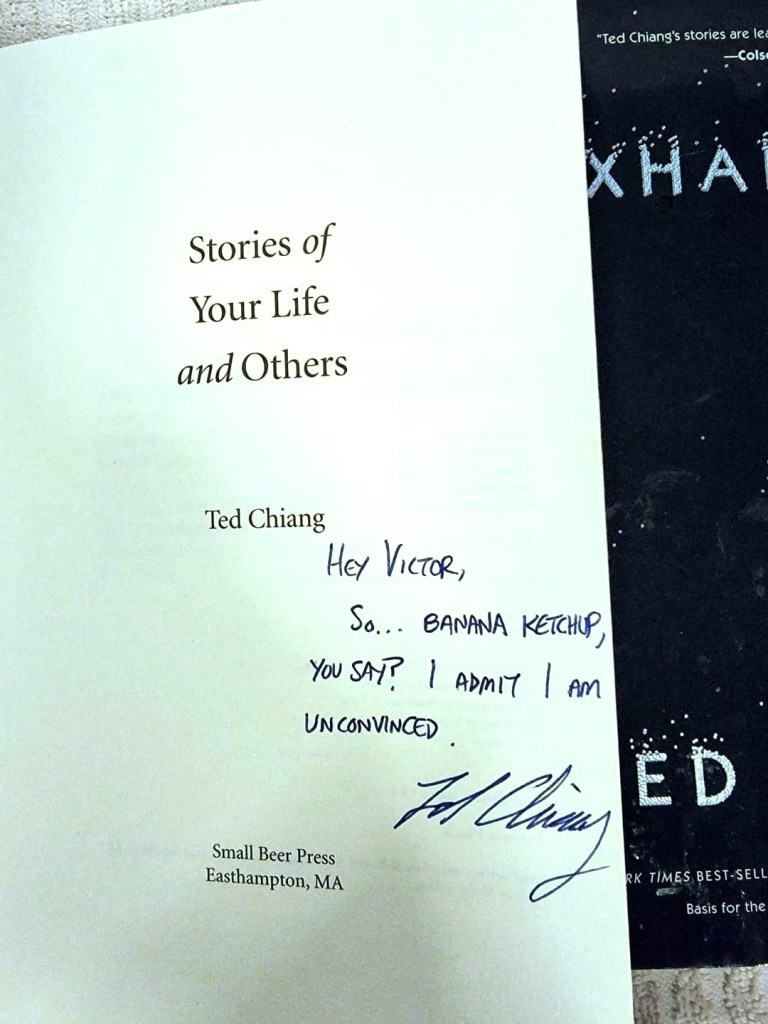
Btw, apart from talking about writing, screenplay adaptations and his stories, did I mention that we also talked about Filipino food? Ted is apparently not a fan of banana ketchup (see below).
I am looking forward to next year’s edition of SWF. Thank you to the organizers, especially Pooja Nansi, the NAC, SBC, The Arts House and festival bookstore Closet Full of Books for making all of this possible.
Thank you also to all the readers who came. You give us writers and our work meaning.
The Singapore Writers Festival for 2022 is nearly here. It’s great that in-person events are back, after a hiatus of two years. I can’t wait to see everyone again.
Actually, I am not doing many events this year, but I am very happy to be part of the following panels:
The age-old struggle between fate and chance. The dreams and fantasies we cling to as testaments to all the versions of ourselves we could have been. We’re familiar with multiverse theory in science (and Doctor Strange), but does it hold any weight in fiction about the everyday, and do we need it? Four authors discuss the logic of creating alternate timelines, the recent interest in multiverse theory among fiction writers, and whether the multiverse provides us with answers about all the “what ifs” in our lives. This is your road not taken.
A Southeast Asian Map for the Science Fiction Future 19 Nov Sat, 7.30pm – 8.30pm at the at the The Arts House, Play Den With Cassandra Khaw, Bryan Thao Worra & Eliza Victoria; Moderator: Victor Fernando R. Ocampo (subbing for Joyce Chng)
Do flying cars and androids alone make for a convincing sci-fi Southeast Asian world? As science-fiction writing continues to break new imaginative grounds, we talk to these writers from the region about how they keep their fictional landscapes distinctly and believably Southeast Asian without falling into tired tropes, stereotypes, loopholes, and paradoxes.
This programme is made possible with the support of the U.S. Embassy Singapore and co-presented with the Singapore Book Council.
(Don’t) Stop Me If You’ve Heard This One Before This programme has been rescheduled to 20 Nov, 7pm – 8pm at the The Arts House, Play Den With Christine Chia, David Wong Hsien Ming & myself; Moderator: Theophilus Kwek
Has this been said before? Well, we’ll say it again: it might finally be time to abandon the search for originality. What is it about the big ‘O’ that has paralyzed and haunted generations of writers seeking the next great unsaid? We’re busting this myth apart in pursuit of more generative ways of creating.
If you haven’t picked up your festival pass yet, now’s a good time to do so. I’m looking forward to the SFF opening this Friday night (4 November). See you all soon!
Please join us online at our “Outside the Western Anglophone Hegemony” Connecting Flights panel at the Science Fiction and Fantasy Writers Association’s Nebula Awards Conference this coming Oct. 8, at 6:00am Pacific | 3:00pm Norway | 6:30pm India | 9:00pm Singapore and the Philippines, with Samit Basu, Lavanya Lakshminarayan, Vida Cruz Borja, myself, and and moderator Regina Kanyu Wang. We’ll talk about our experiences as Asian writers who publish in the English language and in US markets. We’ll also compare our writing craft, share tropes and traditions, and celebrate our very varied influences. Looking forward to having you all along for a fun ride.The SFWA Blurb:
The SFWA Events Team is excited to announce our new Connecting Flights panels to serve as a bridge between the 2022 Nebula Conference Online voyage and the 2023 Nebula Hybrid Conference! Our first Connecting Flight is “Outside the Western Anglophone Hegemony: A Conversation on Writing by Asian Writers” on October 8, 2022 @ 6:00am Pacific | 3:00pm Norway | 6:30pm India | 9:00pm Singapore.
Join us as we highlight the experiences of Asian writers who publish in the English language and US markets. Asian writers from across the globe will compare their craft, share tropes and traditions, and celebrate their influences. This panel will be moderated by Regina Kanyu Wang and feature Victor Fernando R. Ocampo, Vida Cruz, Lavanya Lakshminarayan, and Samit Basu.
Connecting Flight live panels will provide more of the fantastic craft and professional development content for which the Nebula Conference is known. If you already have a 2022 conference registration, you’ll be able to tune in live for this panel or watch it later in our archive. If you do not, we have good news! We have dropped the price to $75 for the remainder of our 2022 Nebula Conference Online voyage. Register here: events.sfwa.org
Registration includes our archive of nearly 50 recorded panels from the May 2022 conference weekend, invitations to join the live tapings of Narrative Worlds when they resume late fall, attendance to our Weekly Writing Dates for nonmembers (they are free for SFWA members), and special professional development and networking events throughout the year, such as this first Connecting Flight. Registrations are valid through April 2023.
If you have any questions, please ask us at events@sfwa.org. Don’t miss this Connecting Flight aboard the Airship Nebula on October
Here’s another teaser from my chapter of Mapping New Stars: A Sourcebook on Philippine Speculative Fiction (Editors: Gabriela Lee and Anna Felicia Sanchez, UP Press pre-publication) which was entitled “The Roots of Speculative Fiction in the Philippines” (you can also read the chapter intro here). For this section, I tried to identify the earliest known Filipino works that could be reasonably argued as Fantasy or Proto-Fantasy, but excluding Folk Literature.
Hope you find this interesting:
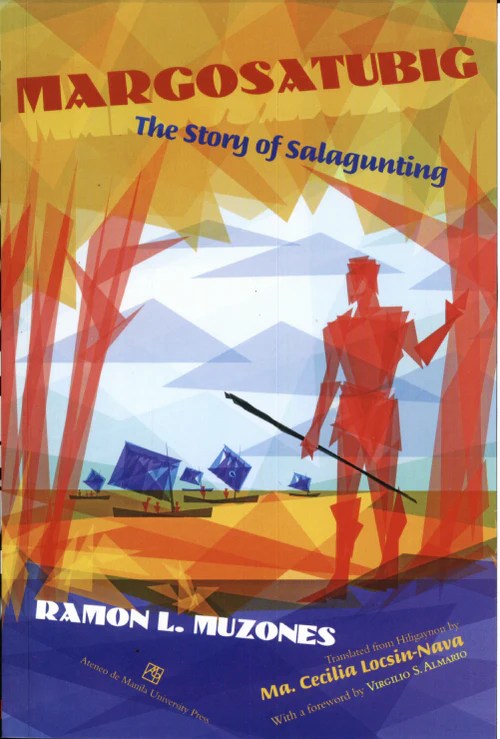
One of the earliest novels that could be characterized as proto-fantasy fiction is Ramon L. Muzones’ Margosatubig: Maragtás ni Salagunting (“The Land of Margosatubig: The History of the Hero Salagunting”) written in Hiligaynon from 1946.This is the cover of the English translation by Ma. Cecilia Y. Locsin-Nava (Ateneo de Manila University Press, 2012).
Navigating the genre of fantasy can sometimes be difficult and confusing as “fantasy” is not a single definite category but rather a cohesion of many diverse, often wildly different, sub-genres. Wikipedia defines “fantasy” as “a genre of speculative fiction set in a fictional universe, often inspired by real world myth and folklore[1]”.
Fantasy proper takes place in a world other than our own (second world fantasy), whereas the sub-genre of magical realism (also known as magical realism or marvelous realism) focuses entirely on an ordinary “real” world where everything is normal, “except for one or two elements that go beyond the realm of possibility as we know it[2]”. To date there are at least 58 named sub-genres of fantasy[3] including urban fantasy, Christian fantasy, dark fantasy, epic fantasy, mythic fantasy and vampire fantasy, just to name a few.
In the Philippines the roots of the fantasy genre begin in folklore – particularly in local tribal myths and legends, as well as in pre-Hispanic ethno-epics of which over 20 oral narratives have been recorded and translated (many more remain to be transcribed and/or translated – Palawan alone has sixty-three)[4]. It should be noted that while the natives of what would be eventually named las Islas Filipinos had little by way of books in codex form, the inland tribes and early maritime polities in the archipelago possessed a remarkable level of literacy and a strong literary tradition[5].
Myths and legends still figure prominently in modern speculative fiction works, albeit in reimagined or subverted forms, such as the graphic novel The Mythology Class by Arnold Arre (Quezon City: Alamat Comics,1999).
Epics (in the Philippines we speak of ethno-epics[6]) are considered the most direct ancestor of the fantasy tale. These long stories essentially consist of an oral narration of the adventures and trials of a revered folk hero. Sadly, as important as they are to Filipino culture, they have been less of an influence on modern speculative fiction compared to indigenous myths and legends. One of the few to have any impact was Biag ni Lam-Ang which is pre-colonial in origin.
Biag ni Lam-Ang (“Life of Lam-Ang”), tells the story of his extraordinary birth, his various quests aided by magical animal companions, as well as his death and resurrection. It became the subject of a metrical romance in the early 20th century, as well as various comic book adaptations in the 1970s, a movie, an animated film and even a musical theatre production.
Lam-Ang, from “Kagitingan at Pag-asa” by Crisanto Aquino in the CCP Encyclopedia of Philippine Art: Philippine Literature, Volume 9 (Cultural Center of the Philippines, 1994)
Let’s Start with (Philippine) Metrical Romance
The most popular genre of fiction during the 18th and 19th centuries was the metrical romance or chivalric romance, a type of narrative poem which in Europe developed from traditional myths and fables and was typically centered on courtly love, knights, and chivalric deeds. This genre wholeheartedly embraced fantastical elements and was a forerunner of the modern fantasy genre.
In the Philippines, metrical romance in vernacular languages (particularly Tagalog) took on two forms: the awit (a poetic narrative verse set in dodecasyllabic quatrains) and the korido (a poetic verse narrative set in octosyllabic quatrains). Like the epics that preceded them, these tales of chivalry were made to be sung and chanted.
Numerous works in Tagalog (around 200 titles were known to have been published[7]), Bicolano, Ilonggo, Kapampangan, Ilocano and the Pangasinan language were written during this period. Interestingly, while metrical romances are not speculative fiction per se, there has been no other time in Philippine history where fantasy-adjacent genre stories were the most accepted and feted literary works.
[4] Eugenio, Damiana L., “Introduction: The Philippine Folk Epic”, Philippine Folk Literature: The Epics (Quezon City: University of the Philippines Press, 2001), p. xi
[5] Jesuit friar Pedro Chirino notes, ‘All islanders are much given to reading and writing, and there is hardly a man and much less a woman, who does not read and write in the letters used in the island of Manila They used to write on reeds and palm-leaves, using as pen an iron point’. However, writing was used mainly for the exchange of letters. Religion, government, and literature were founded on oral tradition. In Chirino, Pedro, Relacion de las Islas Filipinas (Rome: Esteban Paulino, 1604) as translated and reproduced in Blair, Emma Helen and Robertson, James Alexander, The Philippine Islands, 1493-1898: Volume XII, 1601-1604 (Cleveland: Arthur H. Clark Company, 1904), p. 169
[6] As opposed to national epics like Germany’s Niebelunginlied, ethno-epics are “histories” of ethnic groups or small maritime polities that consider themselves “nations”. As per David-Maramba, Asuncion, Early Philippine Literature: From Ancient Times to 1940, (Mandaluyong: National Bookstore, 1971), p. 21. See also Godinez-Ortega, Christine, “The Literary Forms in Philippine Literature”, GOV PH, https://ncca.gov.ph/about-ncca-3/subcommissions/subcommission-on-the-arts-sca/literary-arts/the-literary-forms-in-philippine-literature/, (accessed 15 November 2020).
[7] Jurilla, Patricia May Bantug “Tagalog Bestsellers and the History of the Book in the Philippines”, doctoral thesis submitted to the School of Oriental and African Studies, University of London, 30 August 2006 p. 52
The Mythology Class by Arnold Arre. Originally published by the author in four issues in 1999, it was collected into a special edition by Anino Comics in September 2005 and Nautilus Comics in 2014.







 Name it and this book surely has it. Grab this collection of stories that goes beyond what our mind deems possible and be carried away by all its mystical twists and turns.
 Well,
Well,


 : Anjellyca Villamayor, and Roanne Aludino
 : Chrystal Cariño, Lauren Ainella Tagle, and Sophia Mendoza










 The Infinite Library and Other Stories