What you should know about the 2015 Palanca Awards

The Carlos Palanca Foundation is now accepting entries for the 2015 Carlos Palanca Memorial Awards for Literature in the Philippines. Apart from the fact that you can only submit unpublished works now, the biggest and perhaps most disturbing change is that winner will now be obliged to sign over all their moral rights to their winning work. You can find more about Philippine Intellectual Property rights here and an update here.

Here’s the excellent original post by Tin Lao on Facebook.

(This note was modified on March 5, mainly to say that authors can waive their moral rights under the law, but the waiver will not be valid under certain situations; and that moral rights last forever, beyond the +50 years after death (pre-2013 provision). Thank you, Drea Pasion-Flores, for pointing these out to me.)

The 2015 Palanca Awards entry rules bother me very much. I’m quite curious what interests the changes seek to promote or preserve. I hope this is not a case where overzealous lawyers have crafted rules to protect the client but end up defeating the client’s ultimate objective (which, I’m guessing, is to attract the greatest number of good writers to join the competition).

Future and past winners might wish to check what they will be assigning the contest sponsor:

1. Not only “the concurrent and non-exclusive right to exercise the full copyright and all other intellectual property” over the winning work, BUT ALSO the intellectual property over the contestant’s PREVIOUS PALANCA PRIZE WINNING WORKS.

Meaning to say, if you won before (and the rules didn’t then require that you assign full copyright to the sponsor) and win again in 2015, you’d be assigning full copyright over even your past winning works, which have nothing to do with the current contest. In effect, you’d be giving the sponsor the right to use and distribute (and more, see below) your past and present winning works.

(Caveat: This right is concurrent and non-exclusive–meaning to say, when you assign it to the sponsor, you still exercise it too. But what if Past Winning Author isn’t too keen on sharing copyright over her previous winning works? This might actually discourage her from joining the 2015 contest.)

(By the way: What IS copyright? Under the Philippine Intellectual Property Code, the right to carry out, authorise, or prevent the following:

Reproduction of the work
Dramatization, translation, adaptation, abridgment, arrangement or other transformation of the work
The first public distribution of the original and each copy of the work
Rental of the original or a copy of the work
Public display of the original or a copy of the work;
Public performance of the work; and
Other communication to the public of the work.

Copyright is an economic right–therefore, a copyright holder can derive profit from doing or allowing anyone to do the foregoing activities. If you assign copyright to someone else, you’re allowing that person to profit from doing any of the above activities. It’s the copyright holder, for example, whom you need to ask permission from, if you would like to turn a written work into a movie. The copyright holder might give permission in exchange for a fee. Here’s an interesting hypothetical situation: a theatre group knows that you dislike its work. And so, instead of getting permission to perform your play from you, they strategically go to the person you assigned non-exclusive copyright to. If that person allows the group to perform the play for a fee, it would have no obligation to share with you the fees it collected from the theatre group.)

2. All moral rights over the winning works are waived, in the sponsor’s favor.

What are moral rights? From the Intellectual Property Code of the Philippines: The author of a work shall have the right:

– To require that authorship of a work be attributed to him or her
– To alter the work before its publication or to withhold it from publication
– To object to any change to one’s work
– To restrain the use of one’s name with respect to any work that she did not create (or which is a distortion of her work).

Moral rights are different from but connected to copyright.* Sure, sponsor, go ahead and exercise full copyright over the winning work (concurrently with the author, that is)–but ask a contestant to waive one’s right to be associated with the work as its author too?

Andrea Pasion-Flores points out that Sec. 195 of the IPC does provide that authors can indeed waive their moral rights but this waiver is not valid only if the work is used to “substantially tend to injure the literary or artistic reputation of another author” or to “use the name of the author with respect to a work he did not create”.* But what if the person favored by your waiver uses one’s work without attributing it to the author?

In fact the 2013 revisions to the Intellectual Property Code (IPC) provides that moral rights cannot be assigned or licensed, and shall last during the lifetime of the author and even after his death.**

3. Finally, the rights one assigns to or waives in favor of the sponsor are “worldwide, continuous, and exercised for the maximum time allowed by the law”. Sure, the copyright one has assigned to the sponsor is nonexclusive and concurrent–but some markets do ask for first exclusive publishing rights in a particular region of the world. This would limit the markets that one might wish to bring the work to internationally. (But then again, if one self-publishes, or is happy/lucky enough to find reprint markets, this shouldn’t be a problem. Even so, I can imagine some people might be bothered by this.)

Oh yeah, and this year, only unpublished works can be entered. Posted it on your blog? Sorry. It’s now “a work available to the public by wire or wireless means in such a way that members of the public may access these works from a place and time individually chosen by them.” (IPC 171.3, as referenced by the CPMA rules) This mode of communication to the public already disqualifies your work.

Of course, one is free to enter the contest or not. However, I think it’s only fair that people who enter it know what they’re giving away in exchange for the prize money and prestige of winning the contest. 🙂 (I actually don’t like that we treat the contest as an exchange/ transaction of this sort, but intellectual property rights discussions ARE about business transactions.)

Then again, as one of my copyright-friends has suggested, there’s always this option too: Join, win, publish own version, upload on various electronic platforms, make derivs. :))

Update: (c/o Tin Lao) No more waiver of moral rights; no more retroactive assignment of copyright over past winning works. One still assigns the sponsor nonexclusive copyright over the winning work (meaning, you both share copyright over the winning work). More details here.

My Writing Year – 2014

Twenty-Fourteen was a very stressful year, and as a result, my writing output was not what I’d wanted it to be.  The most significant event was a death in my family (which up to now I still cannot talk about for legal reasons).  I was very close to this person who died and the loss was very hard to bear. On top of family and work issues, 2014 also gave me my first experience being badly trolled. Since I’d already talked about that on another post, I won’t repeat it here.

Despite me being unable to write for months, my novel in limbo, and literally dozens of rejection letters, this the year wasn’t entirely lost for writing. In fact I am very thankful for what I had been blessed with. Let me share some of the highlights:

  1. How my Sister Leonora Brought Home a Wife , my off-planet Science Fiction tribute to pioneer Filipino Short Story writer Manuel E. Arguilla, was published in the inaugural issue of Lakeside Circus last March 2014 (Editor: Carrie Cuinn).
  2. Entanglement , a twisted love story set in my old school at Seguin, Texas, came out in the second volume of LONTAR: The Journal of Southeast Asian Speculative Fiction (Editor: Jason Erik Lundberg, Math Paper Press) in May 2014 . This story was set in the same universe as “Big Enough for the Entire Universe ” from Fish Eats Lion.
  3. Blessed are the Hungry , a space opera set on a generation ship mixing Filipino, Brazilian, Mexican and Igbo influences, appeared in Apex Magazine issue 62 last July 2014 (Editor: Sigrid Ellis), along with a short interview. Here’s a good review from Over the Effing Rainbow. This story was also in Medieval POC’s Best of 2014 list (Yay!)
  4. I m d 1 in 10  , my experimental Jejemon near-future story, was published in the July 2014 issue of The Future Fire (Editor: Djibril al-Ayad). “Jejemon” is a Filipino English-Tagalog argot that developed from the use of Instant Messaging and SMS. This is probably the most challenging work I’ve ever written to date. Like “Finnegan’s Wake”, it may be best read aloud.
  5. Panopticon , a Filipino cyberpunk revenge story, appeared in Philippine Speculative Fiction Volume 9 in October 2014 (Editors: Andrew Drilon and Charles Tan). This marked my second appearance in the venerable PSF series.
  6. An Excerpt from the Philippine Journal of Archaeology (04 October, 1916), a Lovecraftian fantasy story told in footnotes, was featured in Likhaan Journal 8 by the U.P. Institute of Creative Writing last December 2014 (Editor: Gabriela Lee). This is another experimental work, with the story mostly happening in the footnotes of a faux scientific article.

Somewhere along the way I also got to talk about Filipino and Singaporean Speculative Fiction on two panels at the World Science Fiction Convention (Loncon 3) last August. The first one was “The World at Worldcon: SF/F in South and South-East Asia” with Zen Cho, Rochita Loenen-Ruiz, Aishwarya Subramanian, and moderated by the always fantastic Mahvesh Murad.  The second was “Saving the World. All of It.” regarding how the concept of an Apocalypse is viewed by non-Western cinematic traditions with Aishwarya Subramanian, Engineer Yasser Bahjatt, Irena Raseta and Naomi Karmi. This time I got to be the moderator, my first time to do so at a con.

Panel1Panel2

My family and I also got to hang out with fans, fellow writers and many SFF luminaries at the Hugo Awards ceremony. We even got to meet George RR Martin himself, as well as GOT show-runners D.B. Weiss and David Benioff — who graciously posed with us after winning their Hugo for “The Rains of Castamere”.

georgeRR

GOT

However the best part of 2014 was finally getting to meet many fellow authors in person, whether at Loncon, Nine Worlds or the various book launches I had attended.

Nine Worlds

PSF9

Lontar2

This year looks to be even busier as a result of the fall-out from 2014. My writing goal this year is simple – to resume writing my novel and to get at least two stories published. If I manage to do this, I’ll be a happy man.

Let me end this post with a bit of trivia. Many Filipinos ran around wishing family and friends “Manigong Bagong Taon” for 2015. Most assumed this greeting meant have  “a prosperous new year”.  However, strictly speaking, this isn’t correct. The root word for “Manigong” is the old Tagalog word “nigo”    which is synonymous with “asinta”, or in English ” to aim/to plan”. When we wish someone “Manigong Bagong Taon”  we are actually saying “May you achieve what you aim for this year“.  For me, this is a really wonderful thing to say.
Manigong Bagong Taon everyone! Thanks for reading.

Tade Thompson on the Depiction of Otherness in SFF

As a writer often hear about the dilemma of “Writing the Other” i.e. creating stories with characters whose racial heritage, sexual orientation, or religion are different from our own.

In “Emic, Etic, and the depiction of Otherness in SFF” Tade Thompson asks how should we interrogate our text for “otherness” , on how we can fairly represent something which is not our own. He speaks of how we can write sensitively and convincingly about people of diverse backgrounds/cultures without causing offence, or promoting negative stereotypes — as well as the limits of what we can actually do when writing about this difficult (but important) subject.

“No fictional portrayal of any community is ever going to be accurate, including those by members of said community. The best we can hope for is some degree of concordance with lived experience. For example, the stereotype of the obedient Asian wife will have poor concordance while a more nuanced, complex character will have higher concordance. This has to do with the complexity of real life. One thing that becomes obvious from reading anthropology and history is the inability of anyone to capture the entire essence of a culture in words or images. We can try, but it is impossible, and not just to the observer from without. Outsiders cannot see everything and have biases; insiders cannot see everything and have biases.”

A Place of Kalinga, A Place called ‘Safe’

One of my favorite words in Filipino is “Kalinga”. It’s a complex and multifaceted word whose meaning encompassing feelings of caring, refuge and kindness.

The fallout from the reprehensible actions of the rage blogger  ‘Requires Hate” (et al) has made one thing very clear. There is a need for a place where writers like me (People of Colour and other marginalized groups) can express our thoughts and opinions, raise issues and express emotions, or simply be our authentic selves without fear of repression and bullying.  This, I feel (without passing judgement), is best done on a site run by people who are primarily PoC, on an online home where we can control our own narratives.

Tade Thompson and some PoC volunteers have now put up the site called ‘Safe‘ where PoC writers can feel the inexpressible comfort of feeling  ‘Kalinga’  — a place of fellowship and friendship, as well as a place of refuge where those who have been hurt can come to heal.

Because ‘Safe‘ is meant to be an inclusive environment, everyone – no matter what your ethnicity, gender, gender preference, etc. – is welcome to be a part of it, as long as we all agree to be respectful, act like mature adults and follow the rules of the site.

The ache for home lives in all of us, the safe place where we can go as we are and not be questioned.” – Maya Angelou

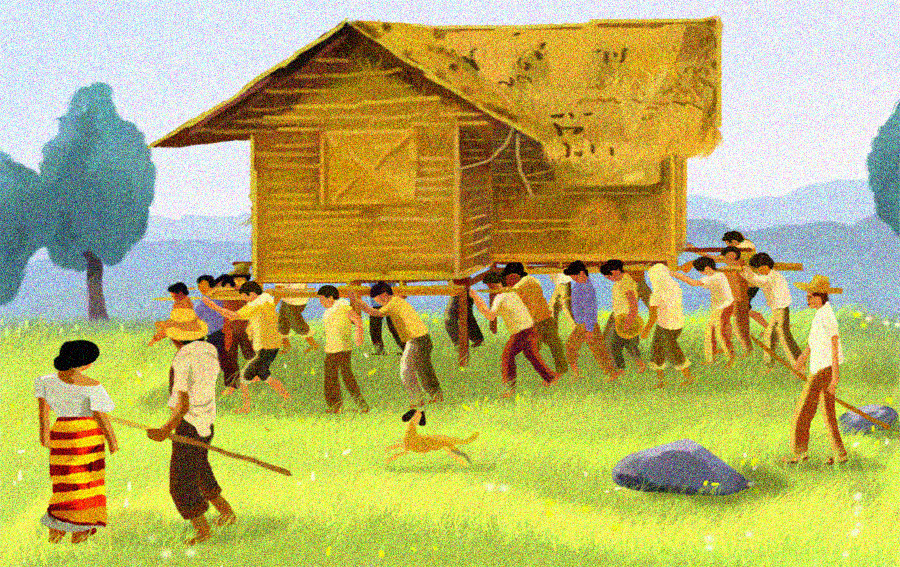
Bayanihan

Art: “Ang Bayanihan” by Mattersmost

A Massive Disappointment

I just can’t keep silent on this any longer.

This whole thing that’s happening to Rochita Loenen-Ruiz is real and has affected me personally as well. I am choosing not to talk about my own experience because I feel that it is irrelevant and takes away from the larger narrative. This whole affair pains me a lot as I had nothing but the greatest respect and admiration for some of the writers involved. However I am aghast to learn that that this kind of crap/shit storm is what we should expect as a new writer coming from the fringes of the SFF world.

Is this really what we have to look forward to?

Whatever your skin colour, your nationality or your gender preference is you have no right to bully and troll. You have no right to blacklist writers you do not like just because they have dissenting opinions or are not part of your cult of sycophants. You are free to judge a person’s writing as long as you do it fairly and objectively. You can even eviscerate it if it sucks – but you have no right to judge the person. As many before me have pointed out, this is not literary criticism, this is silencing. Those of you who enjoy hate as entertainment should take a long hard look into your mirrors. You may not like what you see.

I won’t say anything more about this other than the fact that I have made the conscious decision to make most of my submissions to regional Asian publications. I believe that the only way to make a safe place for people like me to write our stories is to create and nurture our own markets — however small that may be for now.

Here is Rochita’s post on this and she has my 100% support – “Standing Up and Speaking Truth

Here is the original report on this matter from Laura J. Mixon –  “A Report on Damage Done by One Individual Under Several Names

Charles Tan and the Problem of Labels: “Tell Me About _______ Science Fiction”

Names can be cages, We seldom realize it but when we speak or think, we do so in terms of languages and images which we didn’t invent. Words and names which were given to us by our society; words and names, which for many in the developing world, come from the language of former colonial masters. Charles Tan writes a great article on the issue of labeling Science Fiction with terms like “Filipino SF, Singaporean SF, Malaysian SF, etc.” Here’s Charles’ post from the Skiffy and Fanty Show:

charlesatan's avatarThe Skiffy and Fanty Show

As someone who’s asked to talk about Filipino science fiction and fantasy, and after listening to several podcasts (including the Skiffy and Fanty show) interviewing authors who eventually end up representing their country/continent/ethnicity, one question that inevitably gets asked is how they would describe science fiction or fantasy from their country: “What is Filipino speculative fiction?” “What is Chinese science fiction” “What is Carribean fantasy?” The interviewers have good intentions (and I’m one of those people who’ve used that particular phrase numerous times), but the more I think about it, the more problematic the question becomes.

At the root of the question are certain assumptions and privileges people take for granted. The first is that they are coming from a Western paradigm, where Western literature is at the center. The answers and responses of the interviewee will always be compared and contrasted to concepts and ideas from Western literature, because…

View original post 618 more words

“Exit Quiapo Station” in Maximum Volume 2

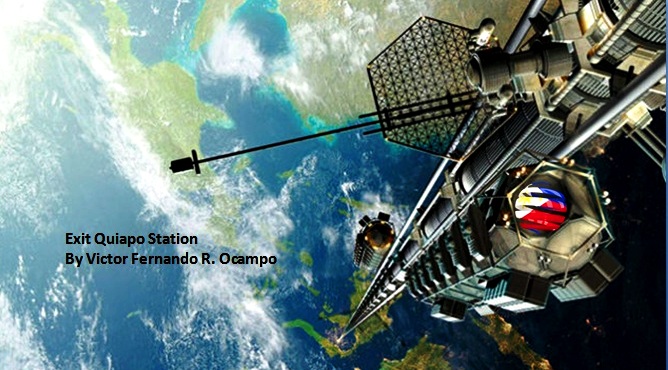
“Exit Quiapo Station” my Robert Altman inspired story set on a Filipino-run space elevator will be in Maximum Volume 2. Thank you so much to editors Dean Francis Alfar and Sarge Lacuesta!

Like “I m d 1 in 10” (at The Future Fire), this work is also quite experimental in structure, playing with the placement of dialogue and mixing up tenses. “Exit Quiapo Station” explores several themes that could affect us in the near future such as commercial space travel,  the rise of the ultra-super rich, the decoupling of sex from reproduction, the acceptance of non-traditional families, and the socio-biological future of call center agents.

In line with my recent stories, there is a Pinoy mythical element in this “mundane” Sci-Fi piece. This time it’s a witch — a mangkukulam who hails from the “magic market”  outside the old Quiapo church, and a bottle of her gayuma love potion.

Exit Quiapo Station

Space Elevator image c/o of io9.

Philippine Speculative Fiction Volume 9 is Out!

Philippine Speculative Fiction Volume 9 has been released on Amazon, Flipreads, Kobo and iTunes. ! This is my second outing with the PSF series (the first, in 2011 was my first published story ever – Resurrection). Thank you to Andrew Drilon, Charles Tan and the good folks of Flipside Publishing.

PSF #9 has my cyberpunk revenge story “Panopticon”. Here’s a short excerpt:

“After a while, I staggered out of the toilet. Night had fallen and I looked around the deserted alley, wondering where I was supposed to go. A bicycle had been propped on a wall just in front of the lavatory entrance. As soon as I stepped towards it, the bike began to flash its lights, illuminating layers of advertising graffiti with a frail white fluorescence. The lights kept blinking until I put my hand on its bamboo handlebars.

A message popped on its digital odometer:

“Thank you for choosing a Shimano Intelligent Bicycle Mr. Salazar. The seat has been automatically adjusted to your height. Your route has already been pre-selected. Please climb aboard and simply pedal.”

I heaved myself up to the gel-padded saddle and kicked off. The bike guided me through the dark and narrow alleys that snaked through the labyrinth of tenements. Everything in New Tundon lay in the shadow of its sole skyscraper, the neon-lit Torre Paraiso.

I passed through the slums like a ghost. Through the yawning windows I saw people leading seemingly normal lives — playing mah-jongg or the card game pusoy dos, eating dinner or simply gathered around their living rooms, plugged into a legion of electronic devices. This was a town of old people, permanently idled; permanently trapped in the amber of unstructured time. Not a single child was in sight.”

PSF9_cover

Cover design by Kevin Roque.

“An Excerpt from the Philippine Journal of Archaeology (04 October, 1916)” in Likhaan 8

I am happy to announce that my Lovecraftian fantasy story (as told through footnotes), “An Excerpt from the Philippine Journal of Archaeology (04 October, 1916)” is scheduled to appear in Likhaan Journal 8 by the U.P. Institute of Creative Writing.

This work explores the deeply-rooted racism inherent in scientific circles during the American Colonial period. It also references the self-same Yellow-peril prejudice that H.P. Lovecraft held against those he disdainfully called “Asiatics”.  In fact the text directly uses phrases borrowed from Lovecraft’s own private letters.

Regarding the setting, having hiked through Mt. Pinatubo a few times, the place names and descriptions I used are based on my knowledge of the area, while the geological assessments came from the research papers of local mining companies. For those interested in a little mystery, the next time you visit the walled city of Intramuros in Manila, take a look at the plaque on Sta. Lucia Barracks. It will tell you the ultimate fate of what the research team of Pölzl and Ashley unearthed.

Lastly, in keeping up my recent (unplanned – I swear) theme of Creatures of Philippines Lower Mythology, this work may or may not feature one or more aswang.  As most Filipinos know an “aswang” is a demonic-looking bat-winged monster that flies off at night seeking to eat the liver and other viscera  of unwary humans.

I believe Likhaan Journal 8 will be coming out this December 2014.

Aswang

Picture above is a still from the NBC series “Grimm”, the episode “Mommy Dearest”

Short Interview for The Future Fire

Here’s a mini-interview for the editors of #TheFutureFire:

1. What does I m d 1 in 10 mean to you?

“1 m d 1 in 10” is a story about what people (like me) are willing to give up when they move to another country. In essence it explores how migrants trade their identities for things like financial stability, safety and the illusion of greener pastures.

What happens when a future immigration process becomes so brutal and competitive that you have to surrender important things like your control over your children or your own sense of right and wrong just to get in.

I wrote this story as a way of addressing many of my (heretofore unspoken) fears about living where I do now.

2. What attracted you to Speculative Fiction?

Fiction writing is, by definition, “Make Believe”, despite its realist trappings — all of it is speculative to me. I just happen to like mine with space ships and dragons (because space ships and dragons dammit!).

3. When did you learn Latin?

I don’t actually speak Latin.I got interested in it after I fell in love with Umberto Eco’s works. I do, however, collect strange and humorous Latin phrases such as “Quantum materiae materietur marmota monax si marmota monax materiam possit materiari?” (hint: it involves wood chucks and the amount of wood they could conceivably chuck).

4. What are you writing next?

I am currently finishing up another SF Short story that deals with the differences between individual and shared memories. I’ve also started sketching out the outline for a SF novel that I hope to write (….and finish someday).

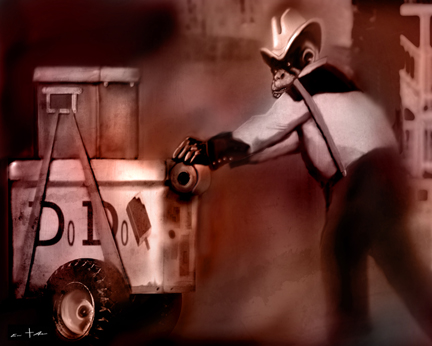
Dodo Pop